p.435
p.439
p.445
p.449
p.455
p.463
p.469
p.477
p.483
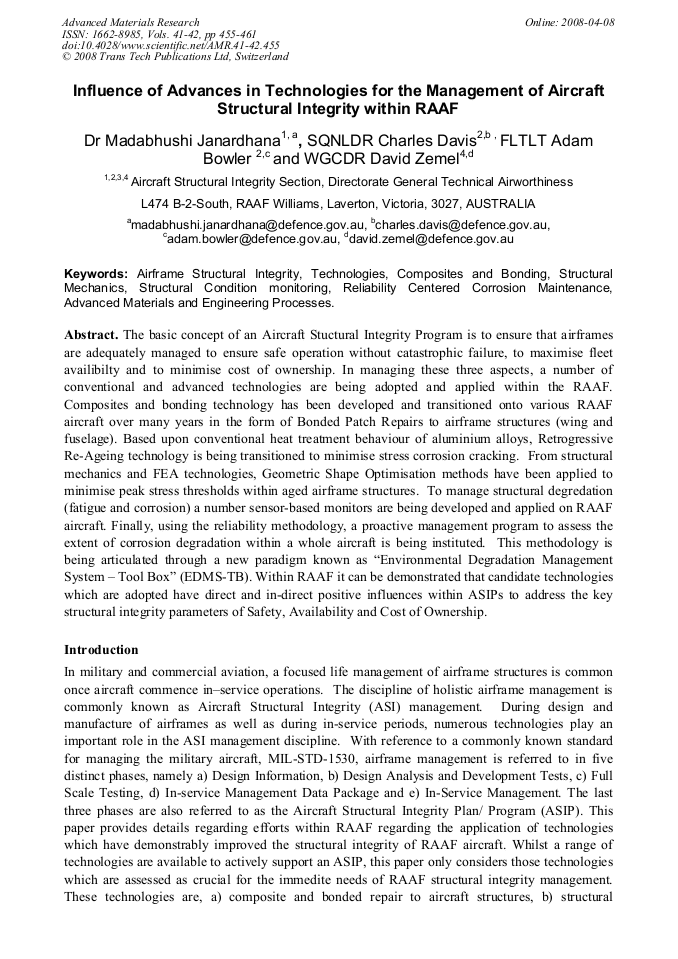
Influence of Advances in Technologies for the Management of Aircraft Structural Integrity within RAAF

Abstract:
The basic concept of an Aircraft Stuctural Integrity Program is to ensure that airframes are adequately managed to ensure safe operation without catastrophic failure, to maximise fleet availibilty and to minimise cost of ownership. In managing these three aspects, a number of conventional and advanced technologies are being adopted and applied within the RAAF. Composites and bonding technology has been developed and transitioned onto various RAAF aircraft over many years in the form of Bonded Patch Repairs to airframe structures (wing and fuselage). Based upon conventional heat treatment behaviour of aluminium alloys, Retrogressive Re-Ageing technology is being transitioned to minimise stress corrosion cracking. From structural mechanics and FEA technologies, Geometric Shape Optimisation methods have been applied to minimise peak stress thresholds within aged airframe structures. To manage structural degredation (fatigue and corrosion) a number sensor-based monitors are being developed and applied on RAAF aircraft. Finally, using the reliability methodology, a proactive management program to assess the extent of corrosion degradation within a whole aircraft is being instituted. This methodology is being articulated through a new paradigm known as “Environmental Degradation Management System – Tool Box” (EDMS-TB). Within RAAF it can be demonstrated that candidate technologies which are adopted have direct and in-direct positive influences within ASIPs to address the key structural integrity parameters of Safety, Availability and Cost of Ownership.
Info:
Periodical:
Pages:
455-461
DOI:
Citation:
Online since:
April 2008
Authors:
Price:
Сopyright:
© 2008 Trans Tech Publications Ltd. All Rights Reserved
Share:
Citation: