p.1431
p.1437
p.1443
p.1449
p.1455
p.1461
p.1467
p.1473
p.1479
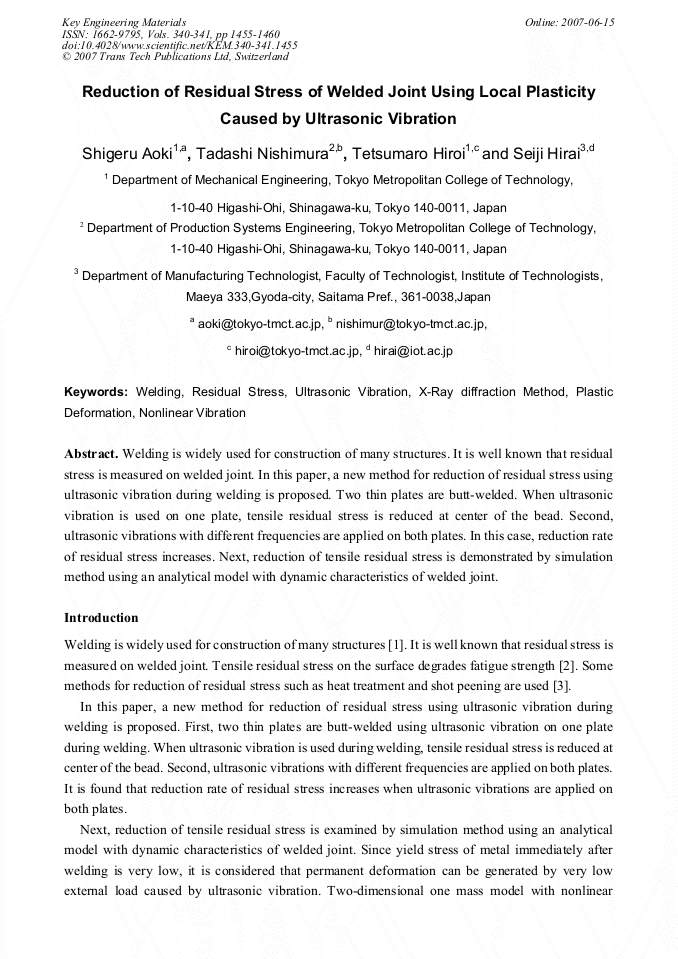
Reduction of Residual Stress of Welded Joint Using Local Plasticity Caused by Ultrasonic Vibration

Abstract:
Welding is widely used for construction of many structures. It is well known that residual stress is measured on welded joint. In this paper, a new method for reduction of residual stress using ultrasonic vibration during welding is proposed. Two thin plates are butt-welded. When ultrasonic vibration is used on one plate, tensile residual stress is reduced at center of the bead. Second, ultrasonic vibrations with different frequencies are applied on both plates. In this case, reduction rate of residual stress increases. Next, reduction of tensile residual stress is demonstrated by simulation method using an analytical model with dynamic characteristics of welded joint.
Info:
Periodical:
Pages:
1455-1460
Citation:
Online since:
June 2007
Authors:
Price:
Сopyright:
© 2007 Trans Tech Publications Ltd. All Rights Reserved
Share:
Citation: