p.753
p.757
p.761
p.765
p.769
p.773
p.777
p.781
p.785
The Study of Human Epithelium Cell Attachment to the Surface of Anode-Oxidized Titanium

Abstract:
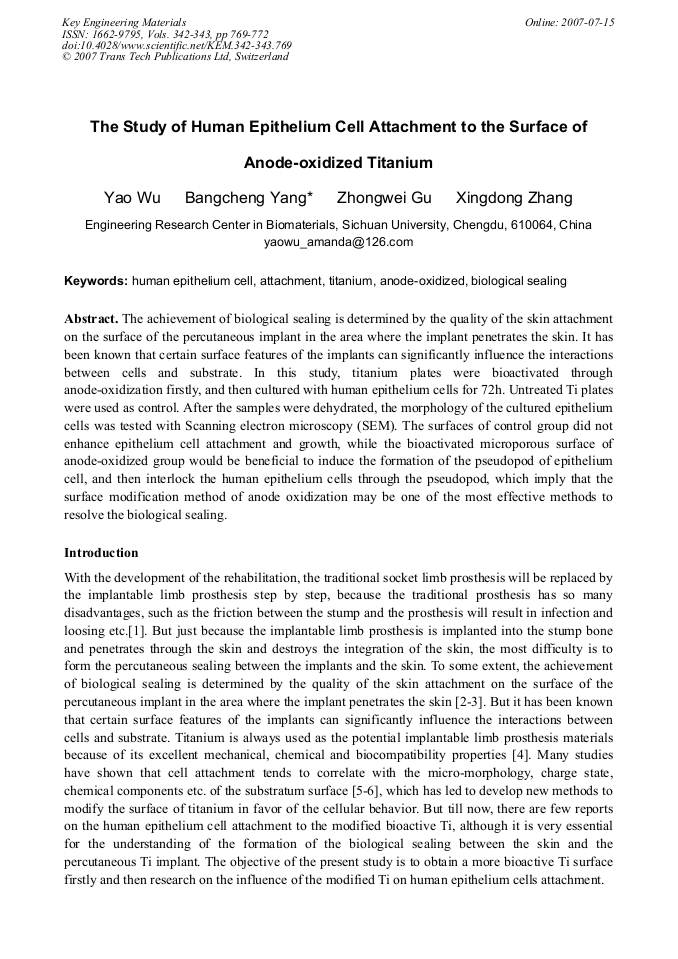
The achievement of biological sealing is determined by the quality of the skin attachment on the surface of the percutaneous implant in the area where the implant penetrates the skin. It has been known that certain surface features of the implants can significantly influence the interactions between cells and substrate. In this study, titanium plates were bioactivated through anode-oxidization firstly, and then cultured with human epithelium cells for 72h. Untreated Ti plates were used as control. After the samples were dehydrated, the morphology of the cultured epithelium cells was tested with Scanning electron microscopy (SEM). The surfaces of control group did not enhance epithelium cell attachment and growth, while the bioactivated microporous surface of anode-oxidized group would be beneficial to induce the formation of the pseudopod of epithelium cell, and then interlock the human epithelium cells through the pseudopod, which imply that the surface modification method of anode oxidization may be one of the most effective methods to resolve the biological sealing.
Info:
Periodical:
Pages:
769-772
Citation:
Online since:
July 2007
Authors:
Price:
Сopyright:
© 2007 Trans Tech Publications Ltd. All Rights Reserved
Share:
Citation: