p.149
p.153
p.157
p.161
p.165
p.169
p.173
p.177
p.181
Wire Cable Failures in Climbing Anchor Chocks

Abstract:
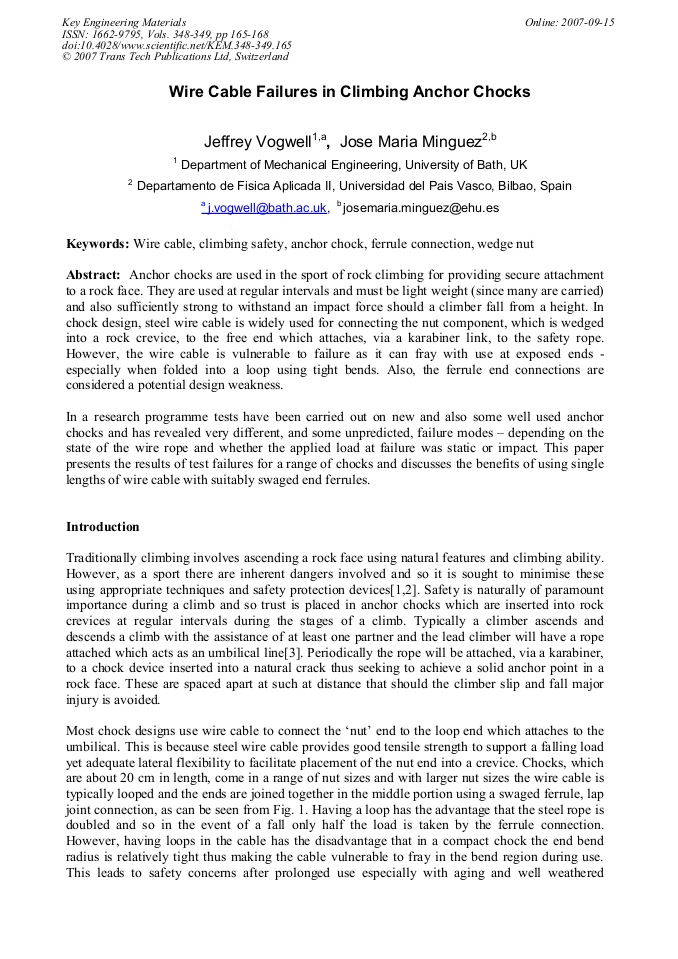
Anchor chocks are used in the sport of rock climbing for providing secure attachment to a rock face. They are used at regular intervals and must be light weight (since many are carried) and also sufficiently strong to withstand an impact force should a climber fall from a height. In chock design, steel wire cable is widely used for connecting the nut component, which is wedged into a rock crevice, to the free end which attaches, via a karabiner link, to the safety rope. However, the wire cable is vulnerable to failure as it can fray with use at exposed ends - especially when folded into a loop using tight bends. Also, the ferrule end connections are considered a potential design weakness. In a research programme tests have been carried out on new and also some well used anchor chocks and has revealed very different, and some unpredicted, failure modes – depending on the state of the wire rope and whether the applied load at failure was static or impact. This paper presents the results of test failures for a range of chocks and discusses the benefits of using single lengths of wire cable with suitably swaged end ferrules.
Info:
Periodical:
Pages:
165-168
Citation:
Online since:
September 2007
Authors:
Keywords:
Price:
Сopyright:
© 2007 Trans Tech Publications Ltd. All Rights Reserved
Share:
Citation: