p.141
p.145
p.151
p.155
p.159
p.163
p.167
p.171
p.175
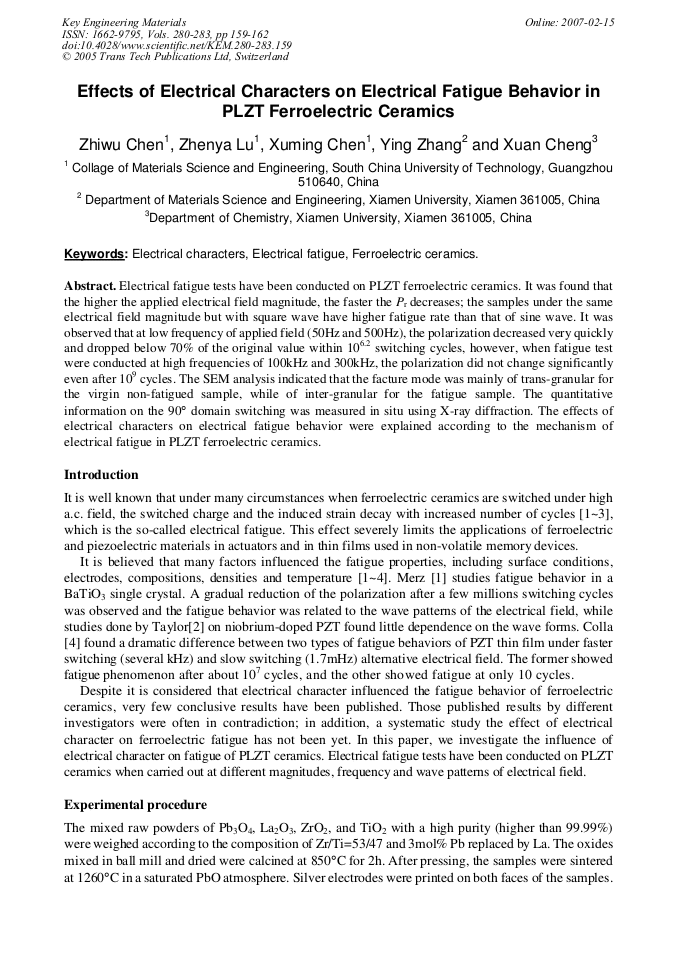
Effects of Electrical Characters on Electrical Fatigue Behavior in PLZT Ferroelectric Ceramics

Abstract:
Electrical fatigue tests have been conducted on PLZT ferroelectric ceramics. It was found that the higher the applied electrical field magnitude, the faster the Pr decreases; the samples under the same electrical field magnitude but with square wave have higher fatigue rate than that of sine wave. It was observed that at low frequency of applied field (50Hz and 500Hz), the polarization decreased very quickly and dropped below 70% of the original value within 106.2 switching cycles, however, when fatigue test were conducted at high frequencies of 100kHz and 300kHz, the polarization did not change significantly even after 109 cycles. The SEM analysis indicated that the facture mode was mainly of trans-granular for the virgin non-fatigued sample, while of inter-granular for the fatigue sample. The quantitative information on the 90° domain switching was measured in situ using X-ray diffraction. The effects of electrical characters on electrical fatigue behavior were explained according to the mechanism of electrical fatigue in PLZT ferroelectric ceramics.
Info:
Periodical:
Pages:
159-162
Citation:
Online since:
February 2007
Authors:
Price:
Сopyright:
© 2005 Trans Tech Publications Ltd. All Rights Reserved
Share:
Citation: