p.262
p.267
p.272
p.275
p.278
p.281
p.287
p.290
p.294
Salicylic Acid and Dibuthyl Phatalate (DBP) Interaction in PMMA-Based Gel Electrolytes

Abstract:
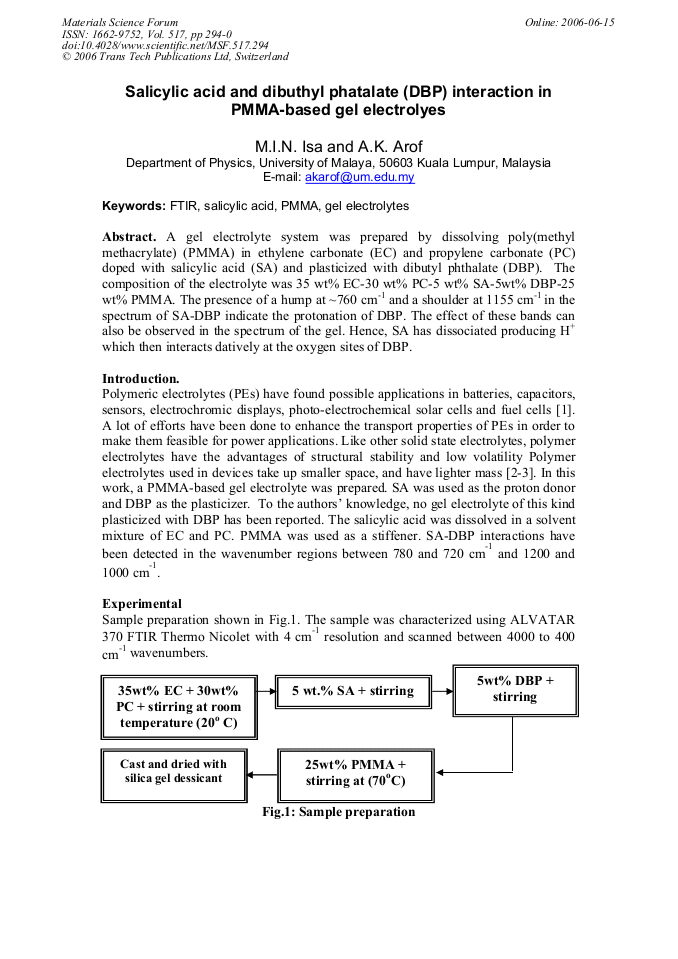
A gel electrolyte system was prepared by dissolving poly(methyl methacrylate) (PMMA) in ethylene carbonate (EC) and propylene carbonate (PC) doped with salicylic acid (SA) and plasticized with dibutyl phthalate (DBP). The composition of the electrolyte was 35 wt% EC-30 wt% PC-5 wt% SA-5wt% DBP-25 wt% PMMA. The presence of a hump at ~760 cm-1 and a shoulder at 1155 cm-1 in the spectrum of SA-DBP indicate the protonation of DBP. The effect of these bands can also be observed in the spectrum of the gel. Hence, SA has dissociated producing H+ which then interacts datively at the oxygen sites of DBP.
Info:
Periodical:
Pages:
294-0
DOI:
Citation:
Online since:
June 2006
Authors:
Price:
Сopyright:
© 2006 Trans Tech Publications Ltd. All Rights Reserved
Share:
Citation: