p.331
p.335
p.339
p.343
p.347
p.351
p.355
p.359
p.363
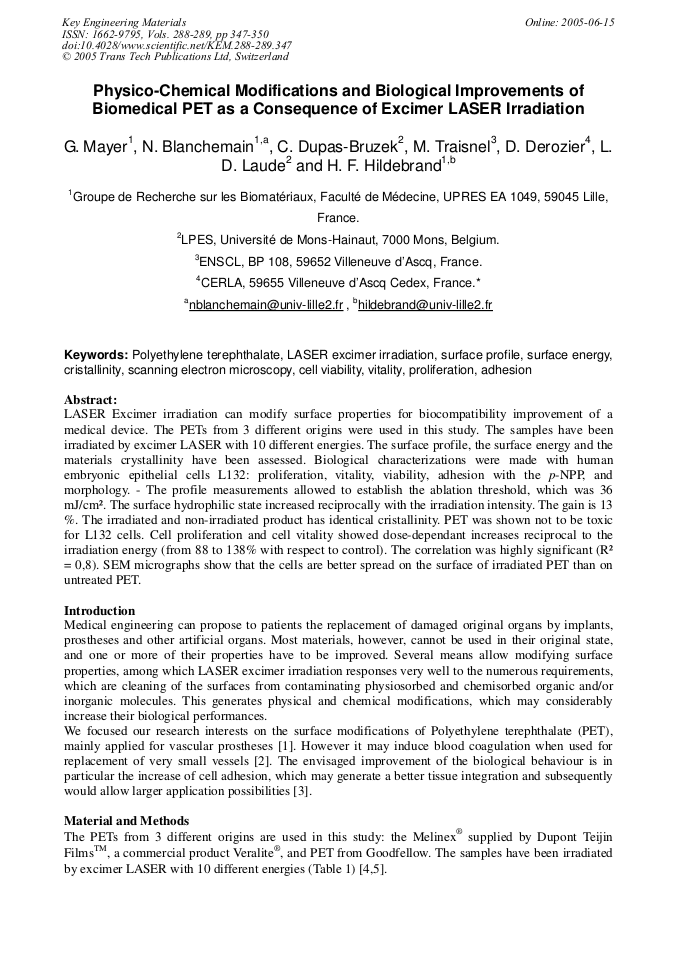
Physico-Chemical Modifications and Biological Improvements of Biomedical PET as a Consequence of Excimer LASER Irradiation

Abstract:
LASER Excimer irradiation can modify surface properties for biocompatibility improvement of a medical device. The PETs from 3 different origins were used in this study. The samples have been irradiated by excimer LASER with 10 different energies. The surface profile, the surface energy and the materials crystallinity have been assessed. Biological characterizations were made with human embryonic epithelial cells L132: proliferation, vitality, viability, adhesion with the p-NPP, and morphology. - The profile measurements allowed to establish the ablation threshold, which was 36 mJ/cm². The surface hydrophilic state increased reciprocally with the irradiation intensity. The gain is 13 %. The irradiated and non-irradiated product has identical cristallinity. PET was shown not to be toxic for L132 cells. Cell proliferation and cell vitality showed dose-dependant increases reciprocal to the irradiation energy (from 88 to 138% with respect to control). The correlation was highly significant (R² = 0,8). SEM micrographs show that the cells are better spread on the surface of irradiated PET than on untreated PET.
Info:
Periodical:
Pages:
347-350
Citation:
Online since:
June 2005
Authors:
Price:
Сopyright:
© 2005 Trans Tech Publications Ltd. All Rights Reserved
Share:
Citation: