p.159
p.163
p.167
p.171
p.175
p.179
p.183
p.188
p.193
Effect of Temperature and Grain Size on the Corrosion Behavior of 316L Stainless Steel in Seawater

Abstract:
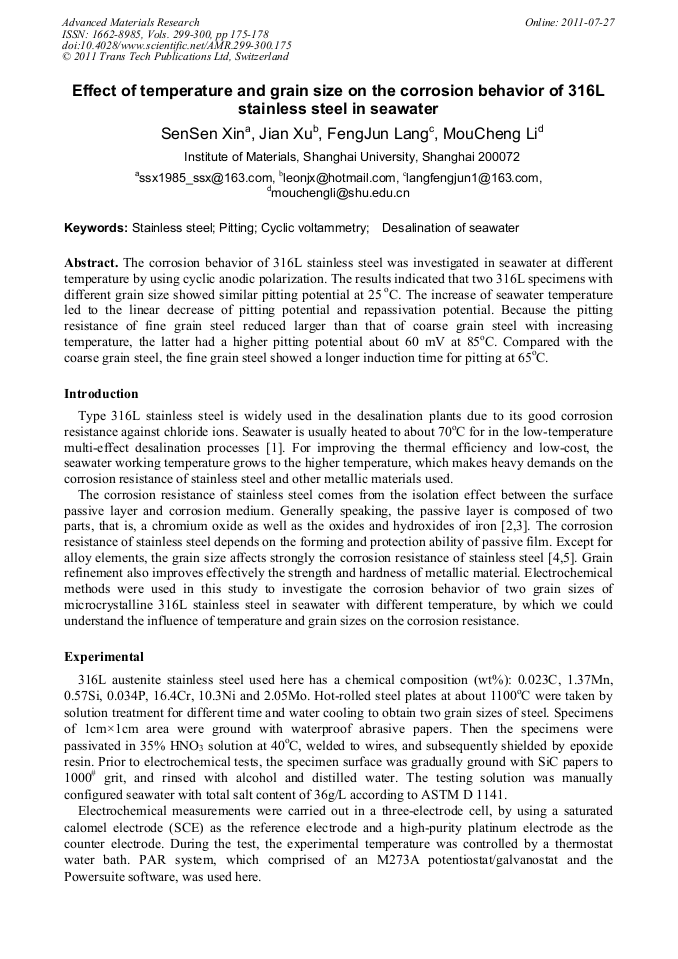
The corrosion behavior of 316L stainless steel was investigated in seawater at different temperature by using cyclic anodic polarization. The results indicated that two 316L specimens with different grain size showed similar pitting potential at 25°C. The increase of seawater temperature led to the linear decrease of pitting potential and repassivation potential. Because the pitting resistance of fine grain steel reduced larger than that of coarse grain steel with increasing temperature, the latter had a higher pitting potential about 60 mV at 85°C. Compared with the coarse grain steel, the fine grain steel showed a longer induction time for pitting at 65°C.
Info:
Periodical:
Pages:
175-178
Citation:
Online since:
July 2011
Authors:
Price:
Сopyright:
© 2011 Trans Tech Publications Ltd. All Rights Reserved
Share:
Citation: