p.96
p.103
p.107
p.111
p.115
p.120
p.125
p.129
p.133
EPS Production during Adaptation of Acidithiobacillus ferrooxidans to High Ferric Ion Concentration

Abstract:
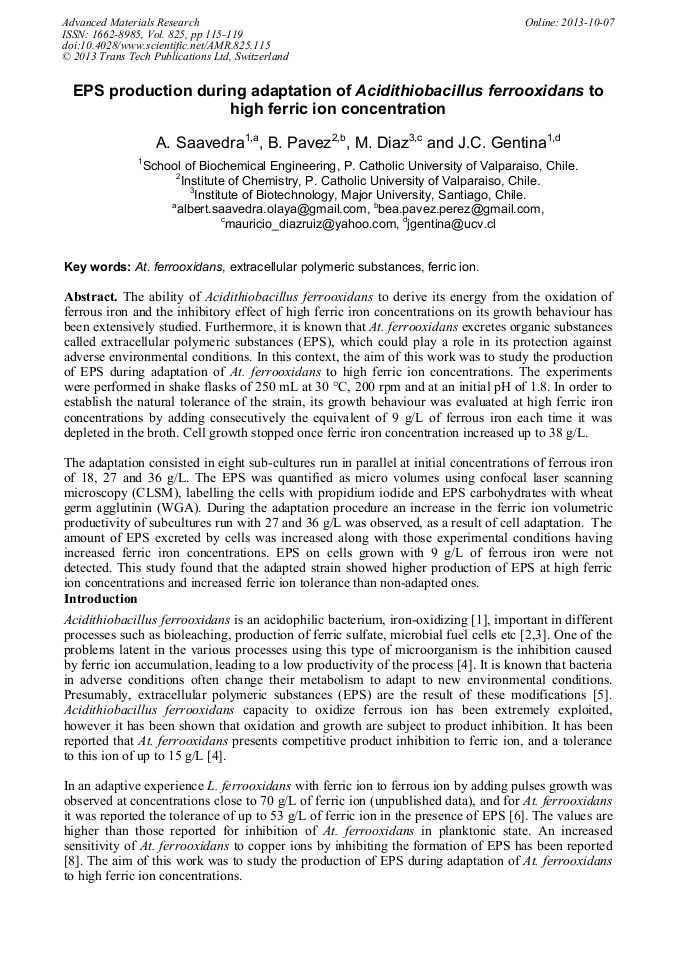
The ability of Acidithiobacillus ferrooxidans to get its energy from the oxidation of ferrous iron and the inhibitory effect of high ferric iron concentrations on its growth behaviour has been extensively studied. Furthermore it is known that A. ferrooxidans exudes organic substances called extracellular polymeric substances (EPS), which could play a role in its protection against adverse environmental conditions. In this context, the aim of this work was to study the production of EPS during adaptation of A. ferrooxidans to high ferric ion concentrations. The experiments were performed in shake flasks of 250 mL at 30 °C, 200 rpm and at an initial pH of 1.8. In order to establish the natural tolerance of the strain, its growth behaviour was evaluated at high ferric iron concentrations by adding consecutively the equivalent of 9 g/L of ferrous iron each time it was depleted in the broth. Cell growth stopped once ferric iron concentration increased up to 38 g/L. The adaptation consisted in eight sub-cultures run in parallel at initial concentrations of ferrous iron of 18, 27 and 36 g/L. The EPS was quantified as micro volumes using confocal laser scanning microscopy (CLSM), labelling the cells with propidium iodide and EPS carbohydrates with wheat germ agglutinin (WGA). During the adaptation procedure it was observed an increase in the ferric ion volumetric productivity of subcultures run with 27 and 36 g/L, as a result of cell adaptation. The amount of EPS exuded by cells was higher along with those experimental conditions having higher ferric iron concentrations. It was not detected EPS on cells grown on 9 g/L of ferrous iron. This study found that the adapted strain showed higher production of EPS at high ferric ion concentrations and higher ferric ion tolerance than non-adapted ones.
Info:
Periodical:
Pages:
115-119
DOI:
Citation:
Online since:
October 2013
Authors:
Price:
Сopyright:
© 2013 Trans Tech Publications Ltd. All Rights Reserved
Share:
Citation: