p.2211
p.2215
p.2219
p.2226
p.2231
p.2235
p.2241
p.2245
p.2250
Increasing Solubility of Poorly Water Soluble Drug Resveratrol by Surfactants and Cyclodextrins

Abstract:
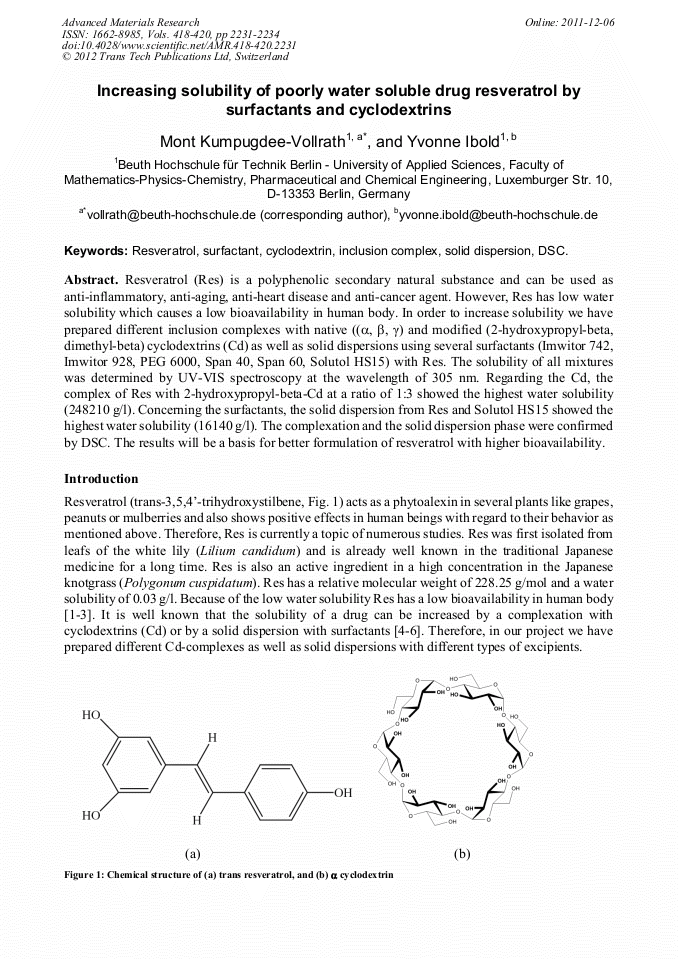
Resveratrol (Res) is a polyphenolic secondary natural substance and can be used as anti-inflammatory, anti-aging, anti-heart disease and anti-cancer agent. However, Res has low water solubility which causes a low bioavailability in human body. In order to increase solubility we have prepared different inclusion complexes with native ((α, β, γ) and modified (2-hydroxypropyl-beta, dimethyl-beta) cyclodextrins (Cd) as well as solid dispersions using several surfactants (Imwitor 742, Imwitor 928, PEG 6000, Span 40, Span 60, Solutol HS15) with Res. The solubility of all mixtures was determined by UV-VIS spectroscopy at the wavelength of 305 nm. Regarding the Cd, the complex of Res with 2-hydroxypropyl-beta-Cd at a ratio of 1:3 showed the highest water solubility (248210 g/l). Concerning the surfactants, the solid dispersion from Res and Solutol HS15 showed the highest water solubility (16140 g/l). The complexation and the solid dispersion phase were confirmed by DSC. The results will be a basis for better formulation of resveratrol with higher bioavailability.
Info:
Periodical:
Pages:
2231-2234
Citation:
Online since:
December 2011
Authors:
Keywords:
Price:
Permissions CCC:
Permissions PLS:
Сopyright:
© 2012 Trans Tech Publications Ltd. All Rights Reserved
Share:
Citation: