p.1281
p.1285
p.1289
p.1293
p.1299
p.1305
p.1309
p.1318
p.1322
The Optimization of Corn Juice Beverage Processing Technology

Abstract:
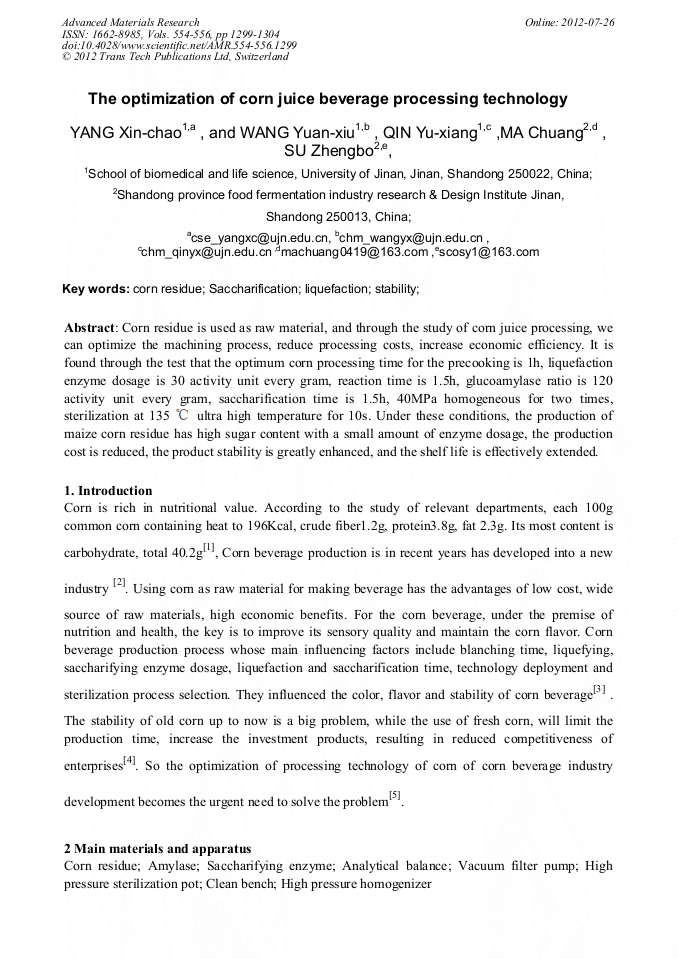
Corn residue is used as raw material, and through the study of corn juice processing, we can optimize the machining process, reduce processing costs, increase economic efficiency. It is found through the test that the optimum corn processing time for the precooking is 1h, liquefaction enzyme dosage is 30 activity unit every gram, reaction time is 1.5h, glucoamylase ratio is 120 activity unit every gram, saccharification time is 1.5h, 40MPa homogeneous for two times, sterilization at 135 °C ultra high temperature for 10s. Under these conditions, the production of maize corn residue has high sugar content with a small amount of enzyme dosage, the production cost is reduced, the product stability is greatly enhanced, and the shelf life is effectively extended.
Info:
Periodical:
Pages:
1299-1304
Citation:
Online since:
July 2012
Authors:
Keywords:
Price:
Permissions CCC:
Permissions PLS:
Сopyright:
© 2012 Trans Tech Publications Ltd. All Rights Reserved
Share:
Citation: