p.3
p.7
p.11
p.15
p.19
p.23
p.27
p.31
p.35
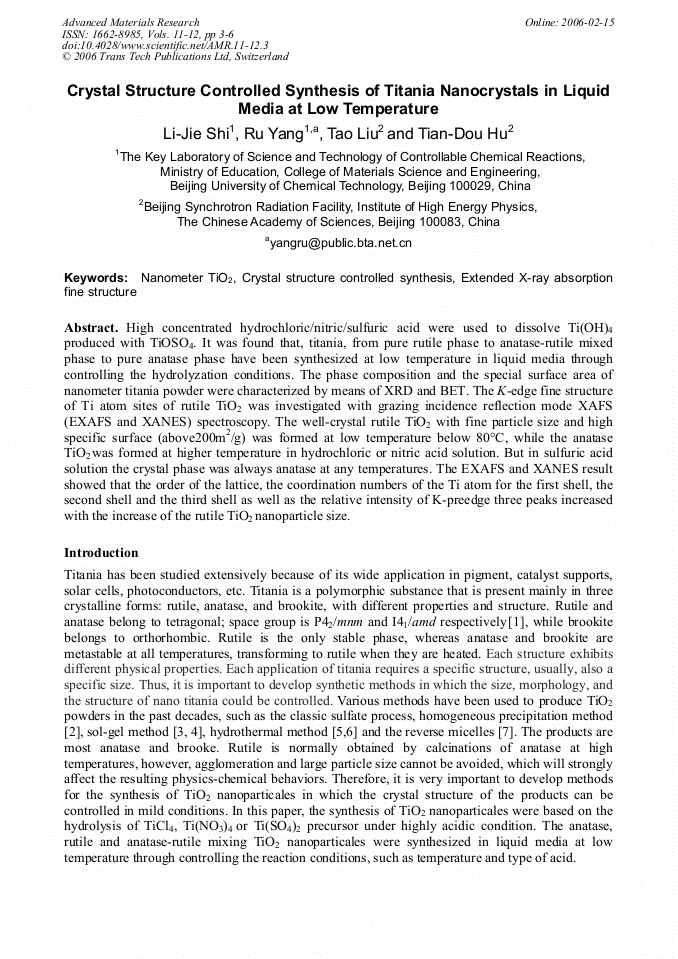
Crystal Structure Controlled Synthesis of Titania Nanocrystals in Liquid Media at Low Temperature

Abstract:
High concentrated hydrochloric/nitric/sulfuric acid were used to dissolve Ti(OH)4 produced with TiOSO4. It was found that, titania, from pure rutile phase to anatase-rutile mixed phase to pure anatase phase have been synthesized at low temperature in liquid media through controlling the hydrolyzation conditions. The phase composition and the special surface area of nanometer titania powder were characterized by means of XRD and BET. The K-edge fine structure of Ti atom sites of rutile TiO2 was investigated with grazing incidence reflection mode XAFS (EXAFS and XANES) spectroscopy. The well-crystal rutile TiO2 with fine particle size and high specific surface (above200m2/g) was formed at low temperature below 80°C, while the anatase TiO2 was formed at higher temperature in hydrochloric or nitric acid solution. But in sulfuric acid solution the crystal phase was always anatase at any temperatures. The EXAFS and XANES result showed that the order of the lattice, the coordination numbers of the Ti atom for the first shell, the second shell and the third shell as well as the relative intensity of K-preedge three peaks increased with the increase of the rutile TiO2 nanoparticle size.
Info:
Periodical:
Pages:
3-6
DOI:
Citation:
Online since:
February 2006
Authors:
Price:
Сopyright:
© 2006 Trans Tech Publications Ltd. All Rights Reserved
Share:
Citation: