p.285
p.290
p.295
p.300
p.305
p.309
p.314
p.319
p.324
Optimize Parameters of Floating Polishing with Tri-Polishing-Disk

Abstract:
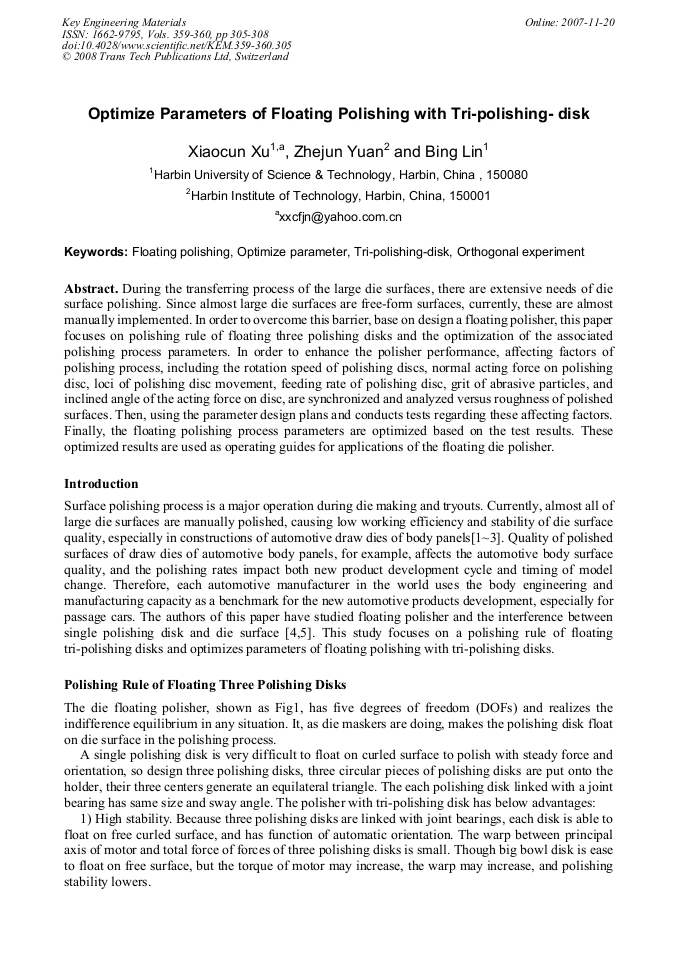
During the transferring process of the large die surfaces, there are extensive needs of die surface polishing. Since almost large die surfaces are free-form surfaces, currently, these are almost manually implemented. In order to overcome this barrier, base on design a floating polisher, this paper focuses on polishing rule of floating three polishing disks and the optimization of the associated polishing process parameters. In order to enhance the polisher performance, affecting factors of polishing process, including the rotation speed of polishing discs, normal acting force on polishing disc, loci of polishing disc movement, feeding rate of polishing disc, grit of abrasive particles, and inclined angle of the acting force on disc, are synchronized and analyzed versus roughness of polished surfaces. Then, using the parameter design plans and conducts tests regarding these affecting factors. Finally, the floating polishing process parameters are optimized based on the test results. These optimized results are used as operating guides for applications of the floating die polisher.
Info:
Periodical:
Pages:
305-308
Citation:
Online since:
November 2007
Authors:
Price:
Сopyright:
© 2008 Trans Tech Publications Ltd. All Rights Reserved
Share:
Citation: