p.11
p.21
p.27
p.31
p.36
p.42
p.48
p.53
p.62
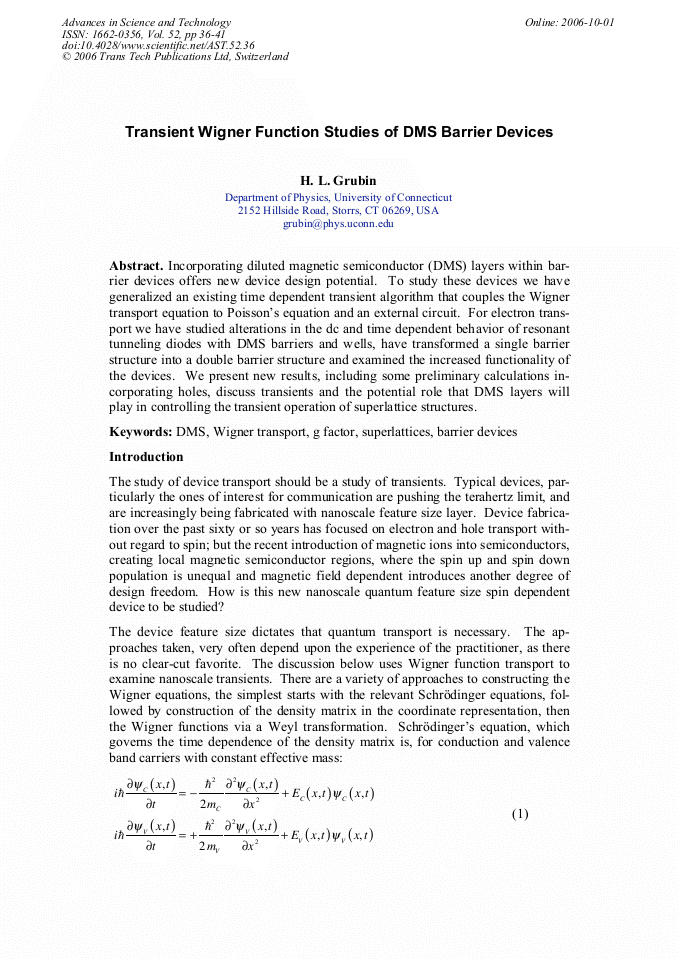
Transient Wigner Function Studies of DMS Barrier Devices

Abstract:
Incorporating diluted magnetic semiconductor (DMS) layers within barrier devices offers new device design potential. To study these devices we have generalized an existing time dependent transient algorithm that couples the Wigner transport equation to Poisson’s equation and an external circuit. For electron transport we have studied alterations in the dc and time dependent behavior of resonant tunneling diodes with DMS barriers and wells, have transformed a single barrier structure into a double barrier structure and examined the increased functionality of the devices. We present new results, including some preliminary calculations incorporating holes, discuss transients and the potential role that DMS layers will play in controlling the transient operation of superlattice structures.
Info:
Periodical:
Pages:
36-41
DOI:
Citation:
Online since:
October 2006
Authors:
Keywords:
Price:
Сopyright:
© 2006 Trans Tech Publications Ltd. All Rights Reserved
Share:
Citation: