Simulation Analysis of Plain Sluice Concrete Temperature and Stress
p.583
p.583
Research on Seepage Characteristics of Deep Cut Canal under Dewatering Well
p.588
p.588
The Australian Approach to Residential Footing Design on Expansive Soils
p.593
p.593
Study on Microstructure of Remolded Loess Using Computerized Tomography
p.599
p.599
Discussions about Modification Issue of Rod Length in Standard Penetration Test
p.602
p.602
Analysis of Influences of Weak Joints and Confining Pressure on Rock Mass Strength by Numerical Simulation
p.607
p.607
The Research of Squat Silos Dynamic Pressure and Eccentric Discharge Trial
p.612
p.612
Study on Effect of Step Height and Load for Large Wind Turbine Spreading Foundation
p.619
p.619
Allowable Height Difference between Adjacent Monoliths with Spherical Surface Key Groove in Transverse Joints
p.624
p.624
Discussions about Modification Issue of Rod Length in Standard Penetration Test

Abstract:
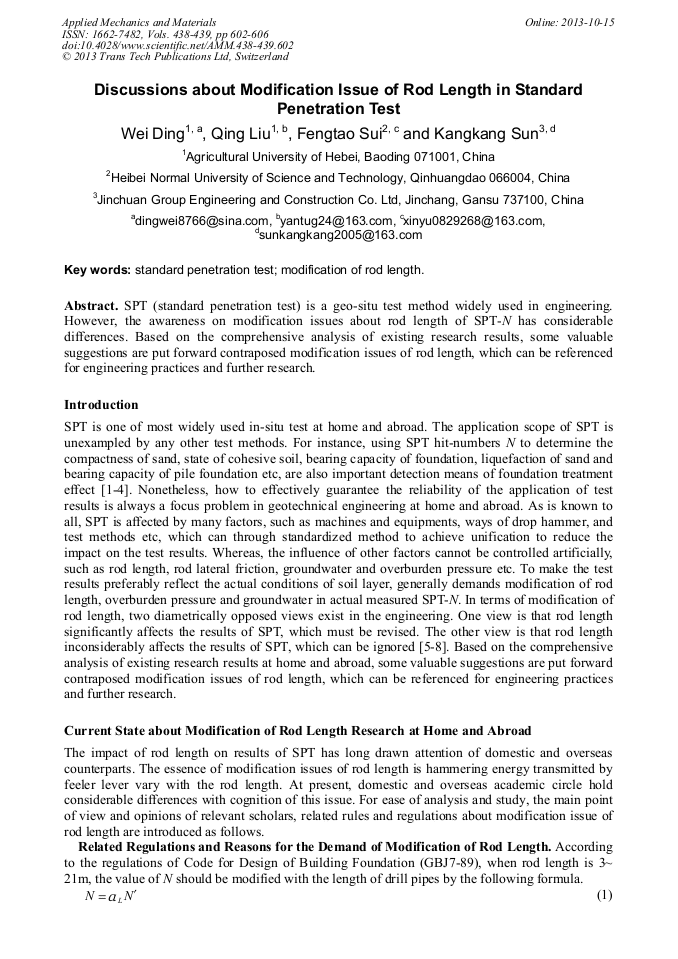
SPT (standard penetration test) is a geo-situ test method widely used in engineering. However, the awareness on modification issues about rod length of SPT-N has considerable differences. Based on the comprehensive analysis of existing research results, some valuable suggestions are put forward contraposed modification issues of rod length, which can be referenced for engineering practices and further research.
You might also be interested in these eBooks

Info:
Periodical:
Applied Mechanics and Materials (Volumes 438-439)
Pages:
602-606
Citation:
Online since:
October 2013
Authors:
Price:
Сopyright:
© 2013 Trans Tech Publications Ltd. All Rights Reserved
Share:
Citation: