p.196
p.203
p.208
p.212
p.217
p.225
p.230
p.235
p.240
Finite Element Analysis of Structural Safety of a Steel TV Tower

Abstract:
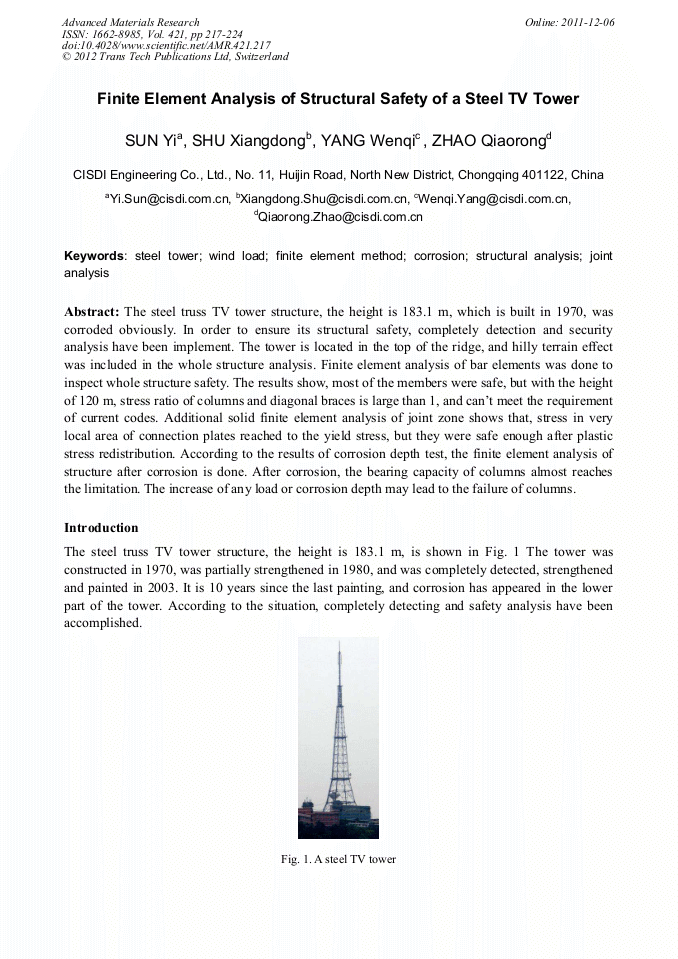
The steel truss TV tower structure, the height is 183.1 m, which is built in 1970, was corroded obviously. In order to ensure its structural safety, completely detection and security analysis have been implement. The tower is located in the top of the ridge, and hilly terrain effect was included in the whole structure analysis. Finite element analysis of bar elements was done to inspect whole structure safety. The results show, most of the members were safe, but with the height of 120 m, stress ratio of columns and diagonal braces is large than 1, and can’t meet the requirement of current codes. Additional solid finite element analysis of joint zone shows that, stress in very local area of connection plates reached to the yield stress, but they were safe enough after plastic stress redistribution. According to the results of corrosion depth test, the finite element analysis of structure after corrosion is done. After corrosion, the bearing capacity of columns almost reaches the limitation. The increase of any load or corrosion depth may lead to the failure of columns.
Info:
Periodical:
Pages:
217-224
DOI:
Citation:
Online since:
December 2011
Authors:
Price:
Сopyright:
© 2012 Trans Tech Publications Ltd. All Rights Reserved
Share:
Citation: