p.643
p.647
p.651
p.655
p.660
p.664
p.671
p.675
p.680
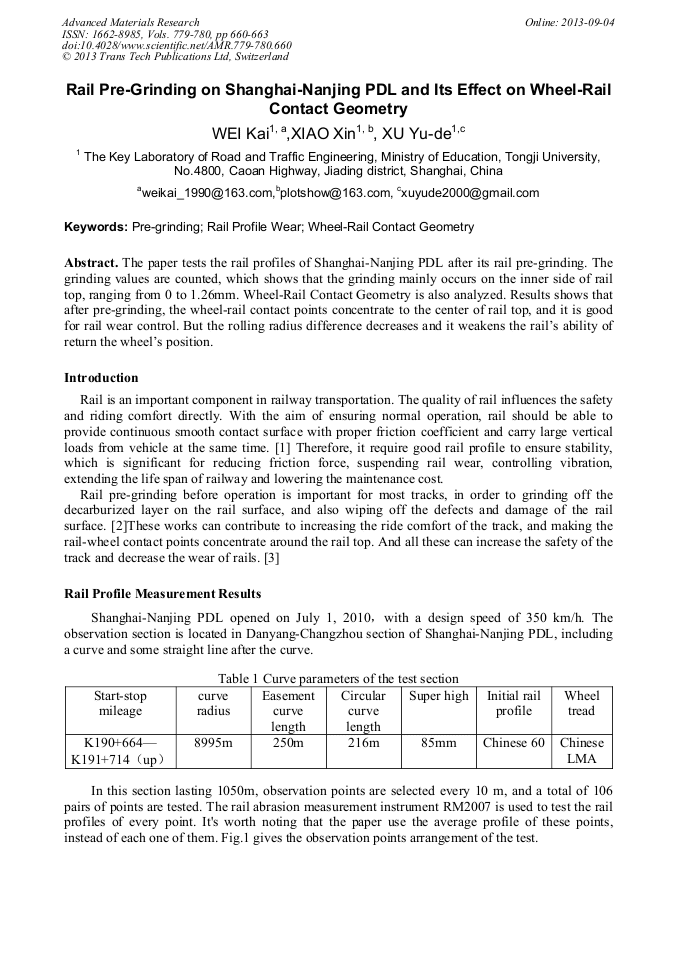
Rail Pre-Grinding on Shanghai-Nanjing PDL and its Effect on Wheel-Rail Contact Geometry

Abstract:
The paper tests the rail profiles of Shanghai-Nanjing PDL after its rail pre-grinding. The grinding values are counted, which shows that the grinding mainly occurs on the inner side of rail top, ranging from 0 to 1.26mm. Wheel-Rail Contact Geometry is also analyzed. Results shows that after pre-grinding, the wheel-rail contact points concentrate to the center of rail top, and it is good for rail wear control. But the rolling radius difference decreases and it weakens the rails ability of return the wheels position.
Info:
Periodical:
Pages:
660-663
Citation:
Online since:
September 2013
Keywords:
Price:
Сopyright:
© 2013 Trans Tech Publications Ltd. All Rights Reserved
Share:
Citation: