Experimental Study of Compression and Carbonation in Concrete Subjected to Freeze-Thaw Environment
p.814
p.814
Effect of Coconut Coir Uniformity on Strength of Unfired Soil Lime Bricks
p.819
p.819
Size Effect on Mechanical Properties of LVL
p.824
p.824
Influence of the Organic and Mineral Additions in the Porosity of Lime Mortars
p.830
p.830
Research on the Mix Design of Cement Asphalt Concrete
p.838
p.838
Effects of Artificial Silica Fume on Compressive Strength and Workability of Self-Compacting Concrete
p.842
p.842
Experimental Research on the Impact Damage of Composite Laminates at Different Energies
p.850
p.850
Deposition Effects on the Ultimate Strength of Tungsten Alloy
p.857
p.857
Study on the Strength Properties of Superior Shoes Board and Furnish
p.861
p.861
Research on the Mix Design of Cement Asphalt Concrete

Abstract:
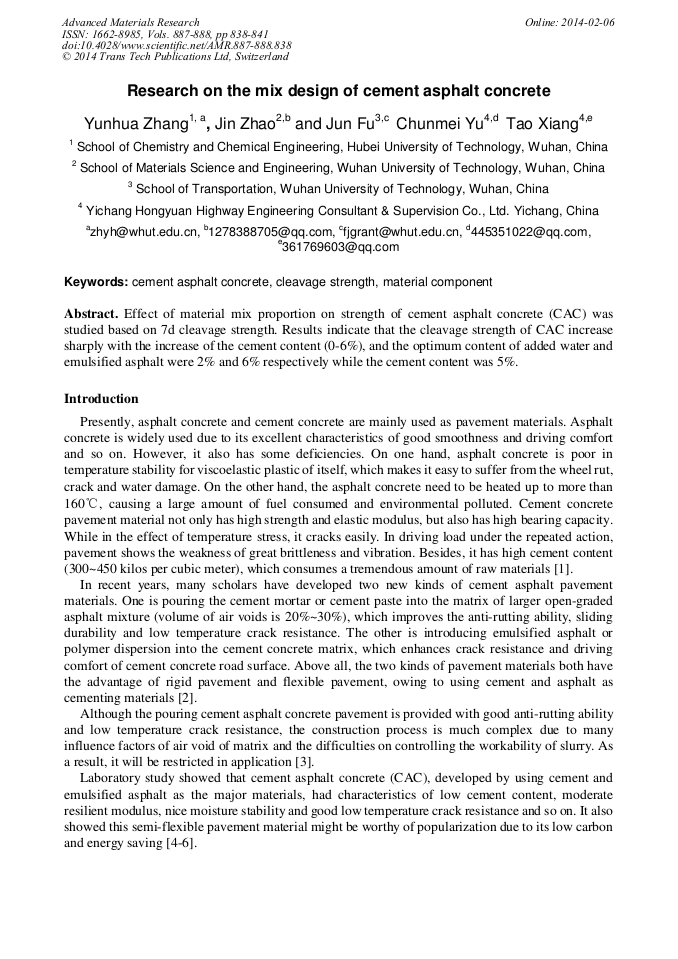
Effect of material mix proportion on strength of cement asphalt concrete (CAC) was studied based on 7d cleavage strength. Results indicate that the cleavage strength of CAC increase sharply with the increase of the cement content (0-6%), and the optimum content of added water and emulsified asphalt were 2% and 6% respectively while the cement content was 5%.
You might also be interested in these eBooks
Info:
Periodical:
Advanced Materials Research (Volumes 887-888)
Pages:
838-841
Citation:
Online since:
February 2014
Authors:
Price:
Сopyright:
© 2014 Trans Tech Publications Ltd. All Rights Reserved
Share:
Citation: