p.81
p.93
p.101
p.115
p.129
p.141
p.151
p.163
p.175
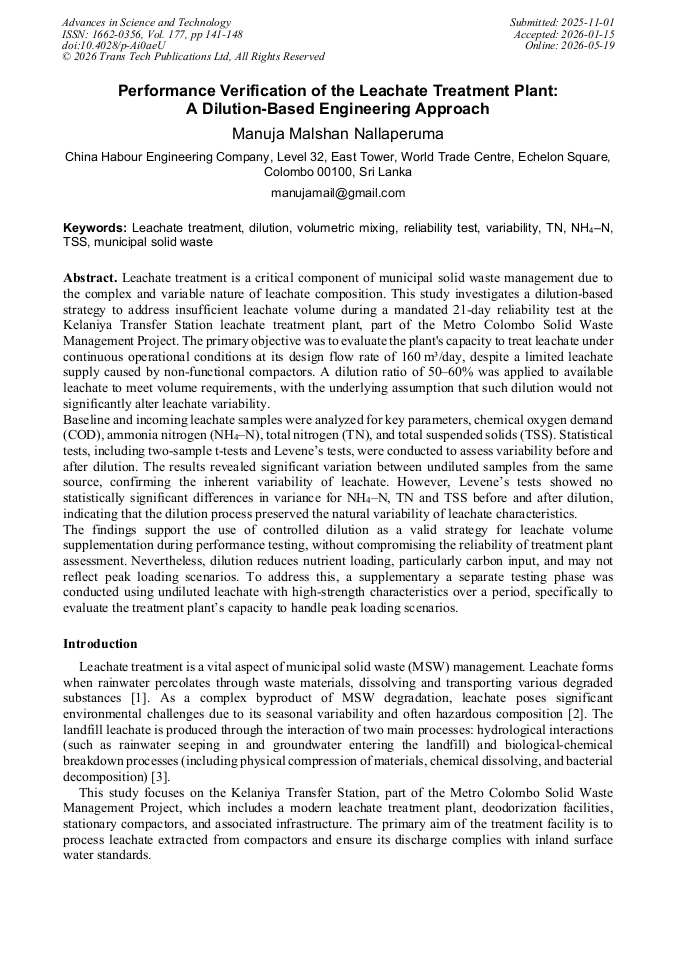
Performance Verification of the Leachate Treatment Plant: A Dilution-Based Engineering Approach

Abstract:
Leachate treatment is a critical component of municipal solid waste management due to the complex and variable nature of leachate composition. This study investigates a dilution-based strategy to address insufficient leachate volume during a mandated 21-day reliability test at the Kelaniya Transfer Station leachate treatment plant, part of the Metro Colombo Solid Waste Management Project. The primary objective was to evaluate the plant's capacity to treat leachate under continuous operational conditions at its design flow rate of 160 m³/day, despite a limited leachate supply caused by non-functional compactors. A dilution ratio of 50–60% was applied to available leachate to meet volume requirements, with the underlying assumption that such dilution would not significantly alter leachate variability. Baseline and incoming leachate samples were analyzed for key parameters, chemical oxygen demand (COD), ammonia nitrogen (NH4–N), total nitrogen (TN), and total suspended solids (TSS). Statistical tests, including two-sample t-tests and Levene’s tests, were conducted to assess variability before and after dilution. The results revealed significant variation between undiluted samples from the same source, confirming the inherent variability of leachate. However, Levene’s tests showed no statistically significant differences in variance for NH4–N, TN and TSS before and after dilution, indicating that the dilution process preserved the natural variability of leachate characteristics. The findings support the use of controlled dilution as a valid strategy for leachate volume supplementation during performance testing, without compromising the reliability of treatment plant assessment. Nevertheless, dilution reduces nutrient loading, particularly carbon input, and may not reflect peak loading scenarios. To address this, a supplementary a separate testing phase was conducted using undiluted leachate with high-strength characteristics over a period, specifically to evaluate the treatment plant’s capacity to handle peak loading scenarios.
Info:
Periodical:
Pages:
141-148
DOI:
Citation:
Online since:
May 2026
Authors:
Keywords:
Price:
Сopyright:
© 2026 Trans Tech Publications Ltd. All Rights Reserved
Share:
Citation: