p.958
p.962
p.966
p.973
p.977
p.982
p.988
p.995
p.999
A Post-Occupancy Evaluation of the Outdoor Environment of the Tahiti Villas in Kunming District

Abstract:
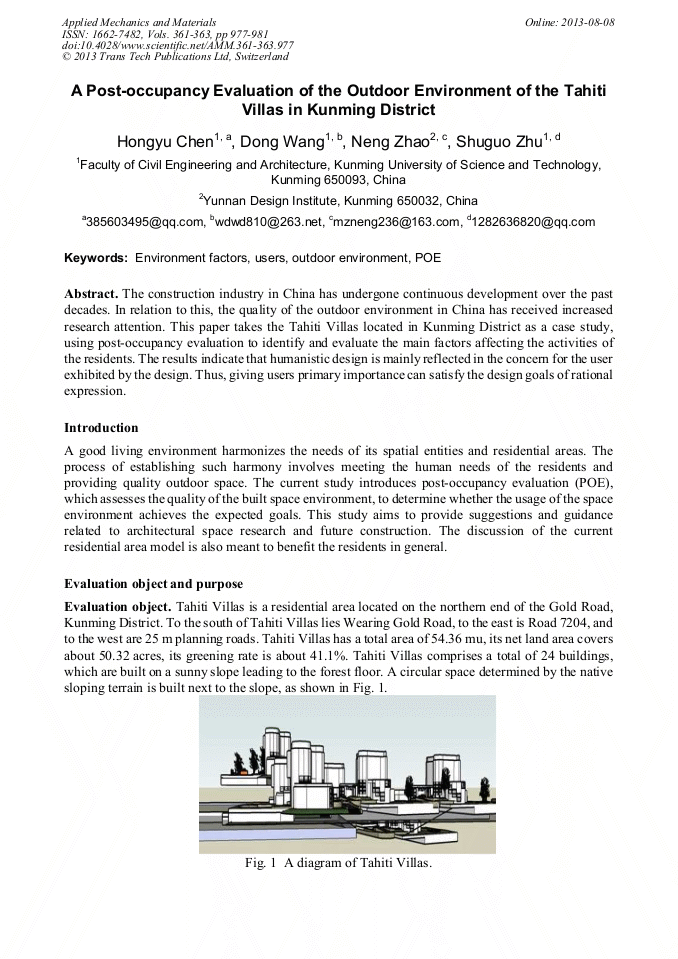
The construction industry in China has undergone continuous development over the past decades. In relation to this, the quality of the outdoor environment in China has received increased research attention. This paper takes the Tahiti Villas located in Kunming District as a case study, using post-occupancy evaluation to identify and evaluate the main factors affecting the activities of the residents. The results indicate that humanistic design is mainly reflected in the concern for the user exhibited by the design. Thus, giving users primary importance can satisfy the design goals of rational expression.
Info:
Periodical:
Pages:
977-981
Citation:
Online since:
August 2013
Authors:
Keywords:
Price:
Сopyright:
© 2013 Trans Tech Publications Ltd. All Rights Reserved
Share:
Citation: