p.1537
p.1541
p.1546
p.1550
p.1554
p.1558
p.1562
p.1568
p.1572
The Principle of Conditional Access System and the Realization of Set-Top Boxes

Abstract:
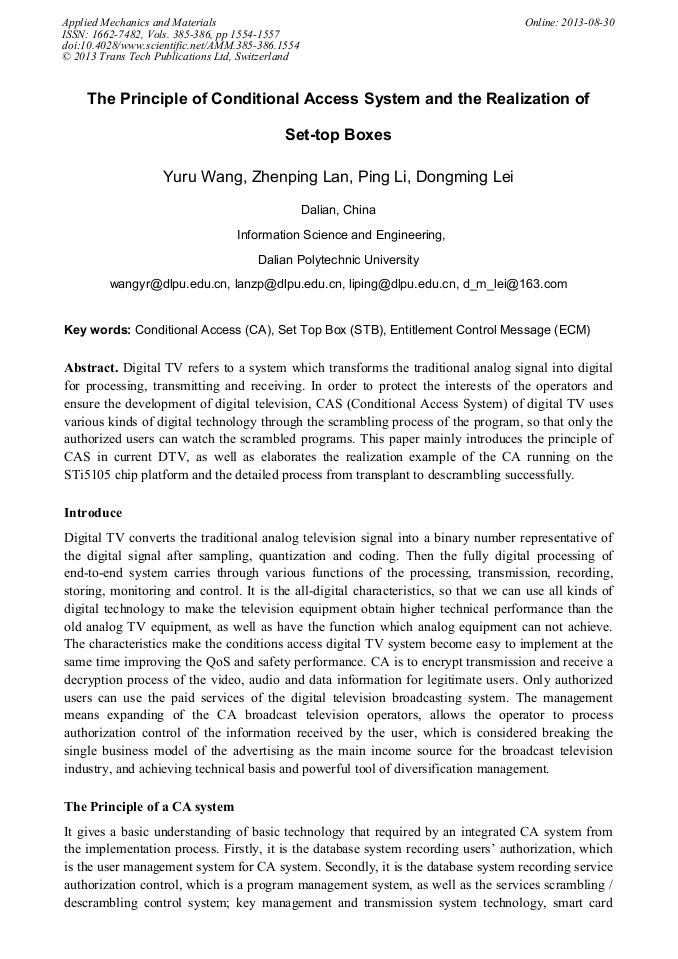
Digital TV refers to a system which transforms the traditional analog signal into digital for processing, transmitting and receiving. In order to protect the interests of the operators and ensure the development of digital television, CAS (Conditional Access System) of digital TV uses various kinds of digital technology through the scrambling process of the program, so that only the authorized users can watch the scrambled programs. This paper mainly introduces the principle of CAS in current DTV, as well as elaborates the realization example of the CA running on the STi5105 chip platform and the detailed process from transplant to descrambling successfully.
Info:
Periodical:
Pages:
1554-1557
Citation:
Online since:
August 2013
Authors:
Price:
Сopyright:
© 2013 Trans Tech Publications Ltd. All Rights Reserved
Share:
Citation: