p.97
p.103
p.108
p.114
p.120
p.124
p.129
p.135
p.141
Comparative Studies of Two Metameric Black Spectral Dimension Reduction Methods Based on Color Difference Optimization

Abstract:
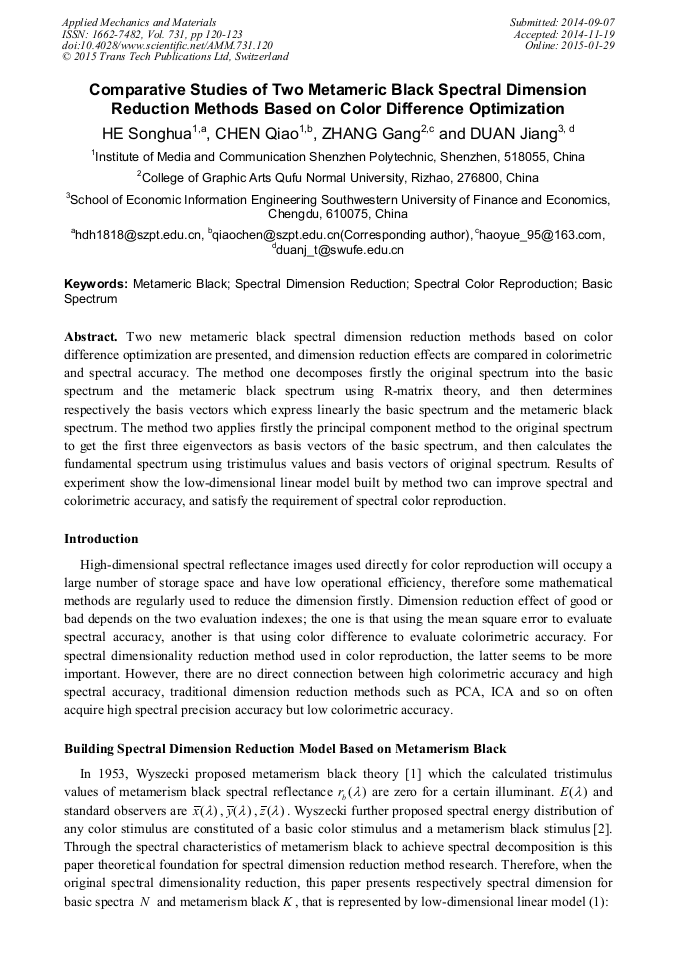
Two new metameric black spectral dimension reduction methods based on color difference optimization are presented, and dimension reduction effects are compared in colorimetric and spectral accuracy. The method one decomposes firstly the original spectrum into the basic spectrum and the metameric black spectrum using R-matrix theory, and then determines respectively the basis vectors which express linearly the basic spectrum and the metameric black spectrum. The method two applies firstly the principal component method to the original spectrum to get the first three eigenvectors as basis vectors of the basic spectrum, and then calculates the fundamental spectrum using tristimulus values and basis vectors of original spectrum. Results of experiment show the low-dimensional linear model built by method two can improve spectral and colorimetric accuracy, and satisfy the requirement of spectral color reproduction.
Info:
Periodical:
Pages:
120-123
DOI:
Citation:
Online since:
January 2015
Authors:
Price:
Сopyright:
© 2015 Trans Tech Publications Ltd. All Rights Reserved
Share:
Citation: