p.514
p.522
p.527
p.532
p.538
p.544
p.550
p.556
p.562
Exploring IEEE 1149.1 EXTEST for External Interconnect of a Multi-FPGA System

Abstract:
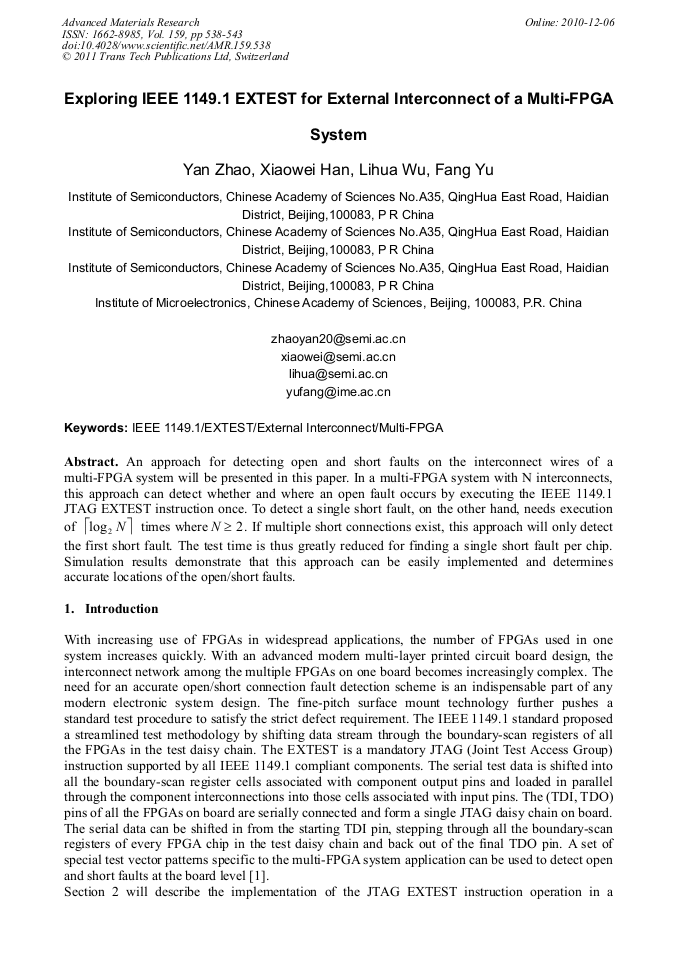
An approach for detecting open and short faults on the interconnect wires of a multi-FPGA system will be presented in this paper. In a multi-FPGA system with N interconnects, this approach can detect whether and where an open fault occurs by executing the IEEE 1149.1 JTAG EXTEST instruction once. To detect a single short fault, on the other hand, needs execution of times where . If multiple short connections exist, this approach will only detect the first short fault. The test time is thus greatly reduced for finding a single short fault per chip. Simulation results demonstrate that this approach can be easily implemented and determines accurate locations of the open/short faults.
Info:
Periodical:
Pages:
538-543
DOI:
Citation:
Online since:
December 2010
Authors:
Keywords:
Price:
Сopyright:
© 2011 Trans Tech Publications Ltd. All Rights Reserved
Share:
Citation: