p.1016
p.1021
p.1025
p.1030
p.1034
p.1038
p.1042
p.1046
p.1051
Effects of Packing Degree and Calcium-Silicon Ratio of Cementitious Material on Strength of Reactive Powder Concrete

Abstract:
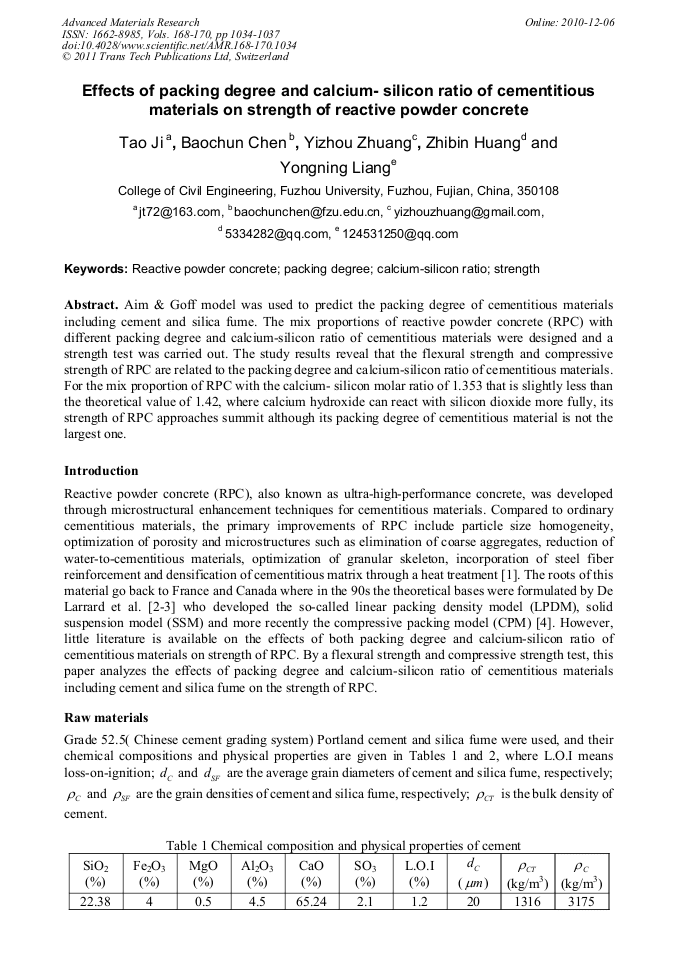
Aim & Goff model was used to predict the packing degree of cementitious materials including cement and silica fume. The mix proportions of reactive powder concrete (RPC) with different packing degree and calcium-silicon ratio of cementitious materials were designed and a strength test was carried out. The study results reveal that the flexural strength and compressive strength of RPC are related to the packing degree and calcium-silicon ratio of cementitious materials. For the mix proportion of RPC with the calcium- silicon molar ratio of 1.353 that is slightly less than the theoretical value of 1.42, where calcium hydroxide can react with silicon dioxide more fully, its strength of RPC approaches summit although its packing degree of cementitious material is not the largest one.
Info:
Periodical:
Pages:
1034-1037
Citation:
Online since:
December 2010
Authors:
Price:
Сopyright:
© 2011 Trans Tech Publications Ltd. All Rights Reserved
Share:
Citation: