p.310
p.314
p.319
p.323
p.329
p.334
p.340
p.344
p.349
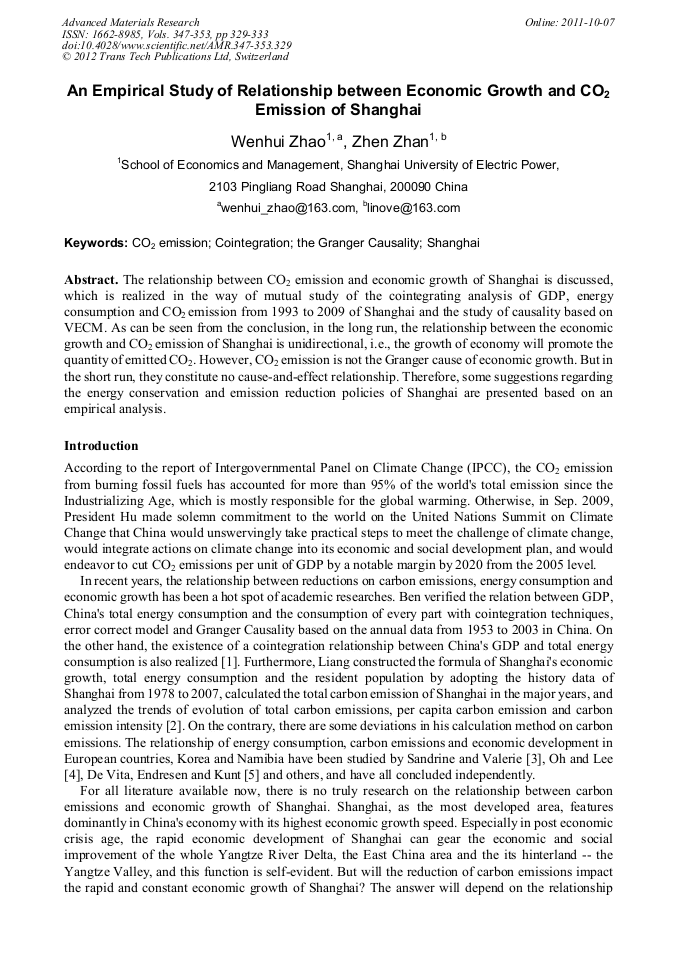
An Empirical Study of Relationship between Economic Growth and CO2 Emission of Shanghai

Abstract:
The relationship between CO2 emission and economic growth of Shanghai is discussed, which is realized in the way of mutual study of the cointegrating analysis of GDP, energy consumption and CO2 emission from 1993 to 2009 of Shanghai and the study of causality based on VECM. As can be seen from the conclusion, in the long run, the relationship between the economic growth and CO2 emission of Shanghai is unidirectional, i.e., the growth of economy will promote the quantity of emitted CO2.However, CO2 emission is not the Granger cause of economic growth. But in the short run, they constitute no cause-and-effect relationship. Therefore, some suggestions regarding the energy conservation and emission reduction policies of Shanghai are presented based on an empirical analysis.
Info:
Periodical:
Pages:
329-333
Citation:
Online since:
October 2011
Authors:
Keywords:
Price:
Сopyright:
© 2012 Trans Tech Publications Ltd. All Rights Reserved
Share:
Citation: