p.315
p.319
p.323
p.329
p.334
p.339
p.345
p.349
p.353
Influence of Powder Preparation Technology on In Situ Reactive Synthesized Ti (C,N)-TiB2 Composite Ceramics

Abstract:
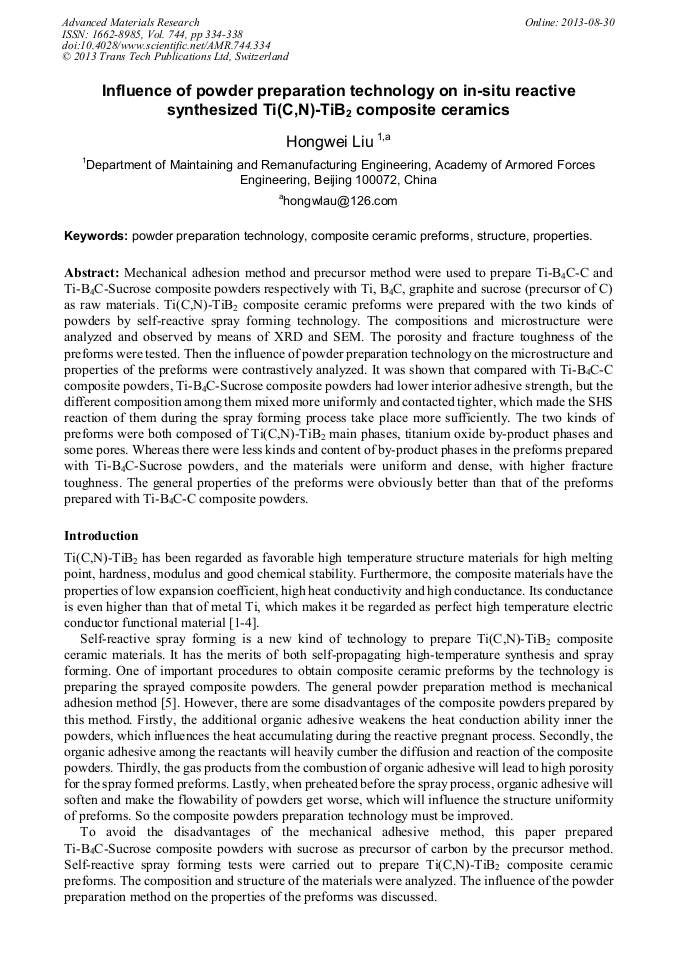
Mechanical adhesion method and precursor method were used to prepare Ti-B4C-C and Ti-B4C-Sucrose composite powders respectively with Ti, B4C, graphite and sucrose (precursor of C) as raw materials. Ti (C,N)-TiB2 composite ceramic preforms were prepared with the two kinds of powders by self-reactive spray forming technology. The compositions and microstructure were analyzed and observed by means of XRD and SEM. The porosity and fracture toughness of the preforms were tested. Then the influence of powder preparation technology on the microstructure and properties of the preforms were contrastively analyzed. It was shown that compared with Ti-B4C-C composite powders, Ti-B4C-Sucrose composite powders had lower interior adhesive strength, but the different composition among them mixed more uniformly and contacted tighter, which made the SHS reaction of them during the spray forming process take place more sufficiently. The two kinds of preforms were both composed of Ti (C,N)-TiB2 main phases, titanium oxide by-product phases and some pores. Whereas there were less kinds and content of by-product phases in the preforms prepared with Ti-B4C-Sucrose powders, and the materials were uniform and dense, with higher fracture toughness. The general properties of the preforms were obviously better than that of the preforms prepared with Ti-B4C-C composite powders.
Info:
Periodical:
Pages:
334-338
DOI:
Citation:
Online since:
August 2013
Authors:
Price:
Сopyright:
© 2013 Trans Tech Publications Ltd. All Rights Reserved
Share:
Citation: