p.941
p.946
p.951
p.958
p.962
p.976
p.980
p.991
p.998
Designing of Watershed Ecological Compensation Mechanism Based on the Key Ecological Function Zone: A Case Study in the Source Area of Dongjiang River

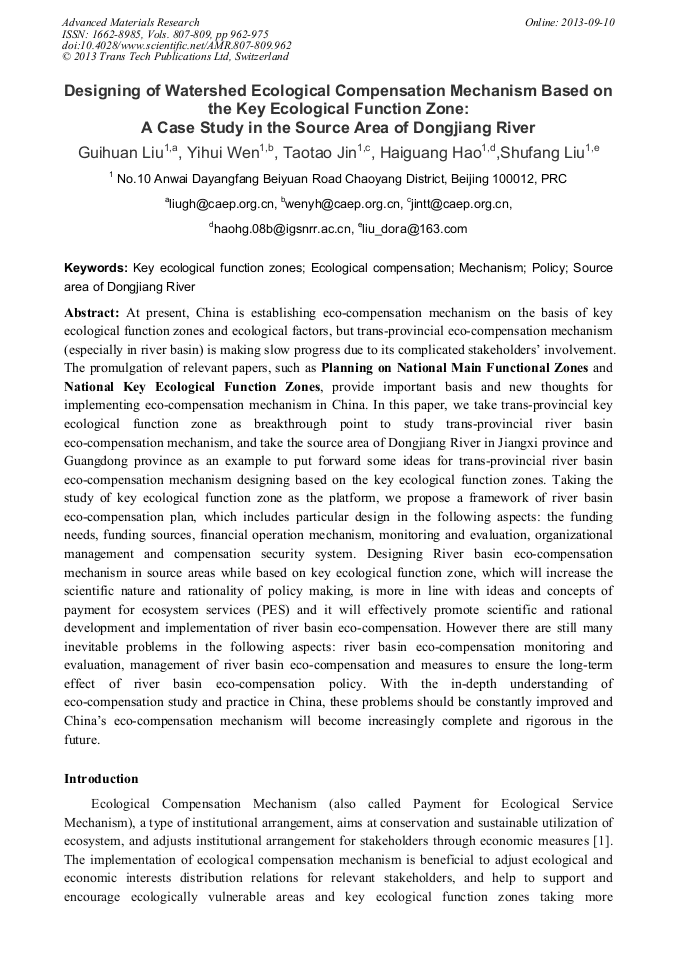
Abstract:
At present, China is establishing eco-compensation mechanism on the basis of key ecological function zones and ecological factors, but trans-provincial eco-compensation mechanism (especially in river basin) is making slow progress due to its complicated stakeholders involvement. The promulgation of relevant papers, such as Planning on National Main Functional Zones and National Key Ecological Function Zones, provide important basis and new thoughts for implementing eco-compensation mechanism in China. In this paper, we take trans-provincial key ecological function zone as breakthrough point to study trans-provincial river basin eco-compensation mechanism, and take the source area of Dongjiang River in Jiangxi province and Guangdong province as an example to put forward some ideas for trans-provincial river basin eco-compensation mechanism designing based on the key ecological function zones. Taking the study of key ecological function zone as the platform, we propose a framework of river basin eco-compensation plan, which includes particular design in the following aspects: the funding needs, funding sources, financial operation mechanism, monitoring and evaluation, organizational management and compensation security system. Designing River basin eco-compensation mechanism in source areas while based on key ecological function zone, which will increase the scientific nature and rationality of policy making, is more in line with ideas and concepts of payment for ecosystem services (PES) and it will effectively promote scientific and rational development and implementation of river basin eco-compensation. However there are still many inevitable problems in the following aspects: river basin eco-compensation monitoring and evaluation, management of river basin eco-compensation and measures to ensure the long-term effect of river basin eco-compensation policy. With the in-depth understanding of eco-compensation study and practice in China, these problems should be constantly improved and Chinas eco-compensation mechanism will become increasingly complete and rigorous in the future.

Info:
Periodical:
Pages:
962-975
Citation:
Online since:
September 2013
Authors:
Price:
Сopyright:
© 2013 Trans Tech Publications Ltd. All Rights Reserved
Share:
Citation: