p.3183
p.3187
p.3194
p.3198
p.3203
p.3207
p.3211
p.3215
p.3219
Using Efficiency Function in Analyzing the Ability of Flatness Control for a Cold Mill

Abstract:
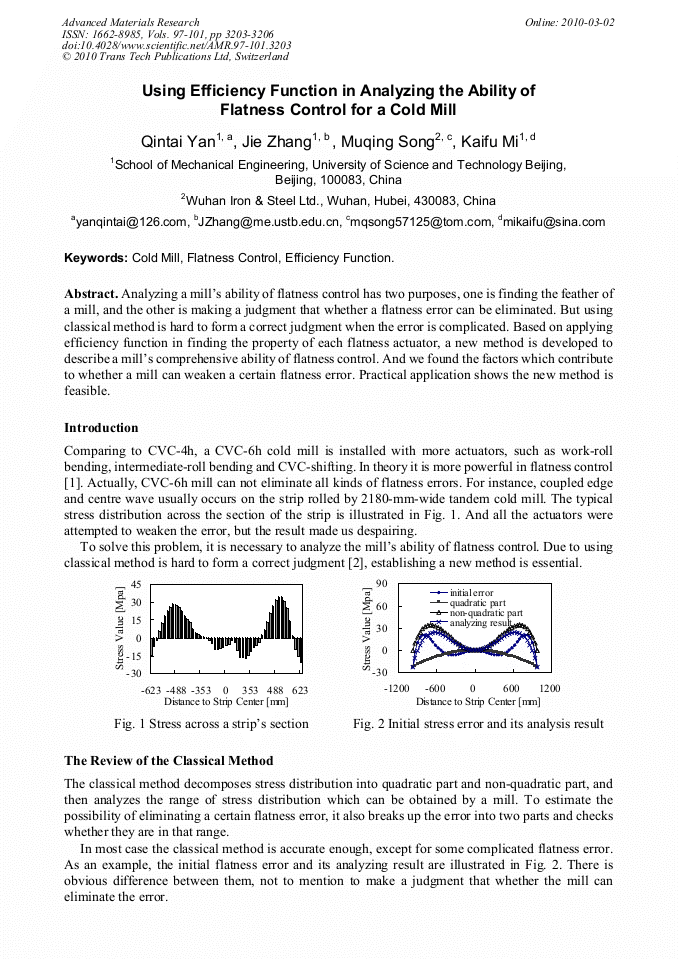
Analyzing a mill’s ability of flatness control has two purposes, one is finding the feather of a mill, and the other is making a judgment that whether a flatness error can be eliminated. But using classical method is hard to form a correct judgment when the error is complicated. Based on applying efficiency function in finding the property of each flatness actuator, a new method is developed to describe a mill’s comprehensive ability of flatness control. And we found the factors which contribute to whether a mill can weaken a certain flatness error. Practical application shows the new method is feasible.
Info:
Periodical:
Pages:
3203-3206
Citation:
Online since:
March 2010
Authors:
Keywords:
Price:
Сopyright:
© 2010 Trans Tech Publications Ltd. All Rights Reserved
Share:
Citation: