p.163
p.168
p.177
p.183
p.189
p.195
p.200
p.206
p.211
Predictive Model of Surface Roughness in High-Speed End Milling Process by Factorial Design of Experiments

Abstract:
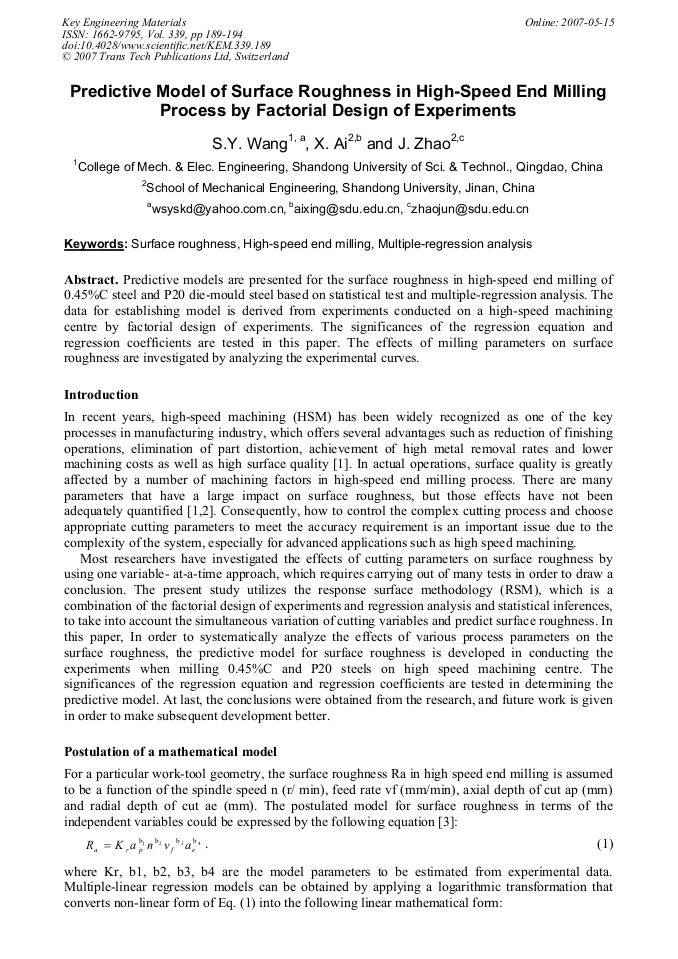
Predictive models are presented for the surface roughness in high-speed end milling of 0.45%C steel and P20 die-mould steel based on statistical test and multiple-regression analysis. The data for establishing model is derived from experiments conducted on a high-speed machining centre by factorial design of experiments. The significances of the regression equation and regression coefficients are tested in this paper. The effects of milling parameters on surface roughness are investigated by analyzing the experimental curves.
Info:
Periodical:
Pages:
189-194
DOI:
Citation:
Online since:
May 2007
Authors:
Price:
Сopyright:
© 2007 Trans Tech Publications Ltd. All Rights Reserved
Share:
Citation: