p.707
p.713
p.719
p.726
p.732
p.738
p.744
p.750
p.759
Process Design in Pulse Electrochemical Machining Based on Material Specific Data – 1.4301 and Electrolytic Copper as an Example

Abstract:
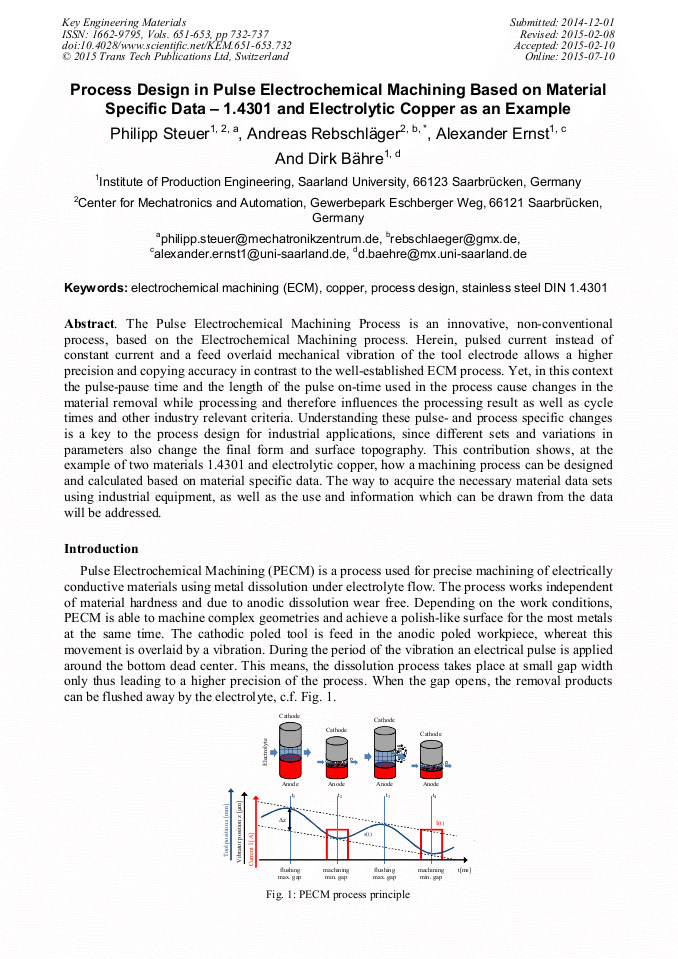
The Pulse Electrochemical Machining Process is an innovative, non-conventional process, based on the Electrochemical Machining process. Herein, pulsed current instead of constant current and a feed overlaid mechanical vibration of the tool electrode allows a higher precision and copying accuracy in contrast to the well-established ECM process. Yet, in this context the pulse-pause time and the length of the pulse on-time used in the process cause changes in the material removal while processing and therefore influences the processing result as well as cycle times and other industry relevant criteria. Understanding these pulse- and process specific changes is a key to the process design for industrial applications, since different sets and variations in parameters also change the final form and surface topography. This contribution shows, at the example of two materials 1.4301 and electrolytic copper, how a machining process can be designed and calculated based on material specific data. The way to acquire the necessary material data sets using industrial equipment, as well as the use and information which can be drawn from the data will be addressed.
Info:
Periodical:
Pages:
732-737
Citation:
Online since:
July 2015
Authors:
Price:
Сopyright:
© 2015 Trans Tech Publications Ltd. All Rights Reserved
Share:
Citation: