p.377
p.381
p.385
p.389
p.393
p.397
p.401
p.405
p.409
Designing Light Alloys for Fatigue Crack Growth Resistance

Abstract:
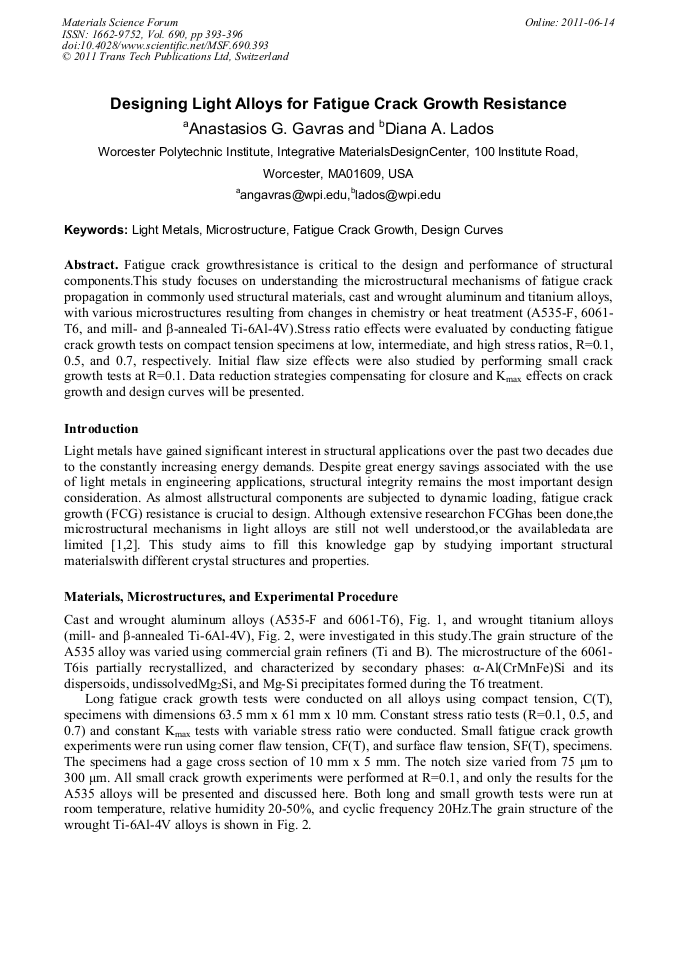
Fatigue crack growthresistance is critical to the design and performance of structural components.This study focuses on understanding the microstructural mechanisms of fatigue crack propagation in commonly used structural materials, cast and wrought aluminum and titanium alloys, with various microstructures resulting from changes in chemistry or heat treatment (A535-F, 6061-T6, and mill- and b-annealed Ti-6Al-4V).Stress ratio effects were evaluated by conducting fatigue crack growth tests on compact tension specimens at low, intermediate, and high stress ratios, R=0.1, 0.5, and 0.7, respectively. Initial flaw size effects were also studied by performing small crack growth tests at R=0.1. Data reduction strategies compensating for closure and Kmax effects on crack growth and design curves will be presented.
Info:
Periodical:
Pages:
393-396
DOI:
Citation:
Online since:
June 2011
Authors:
Keywords:
Price:
Сopyright:
© 2011 Trans Tech Publications Ltd. All Rights Reserved
Share:
Citation: