p.295
p.303
p.309
p.317
p.325
p.331
p.341
p.349
p.357
Measuring of a Nose Landing Gear Load during Take-Off and Landing

Abstract:
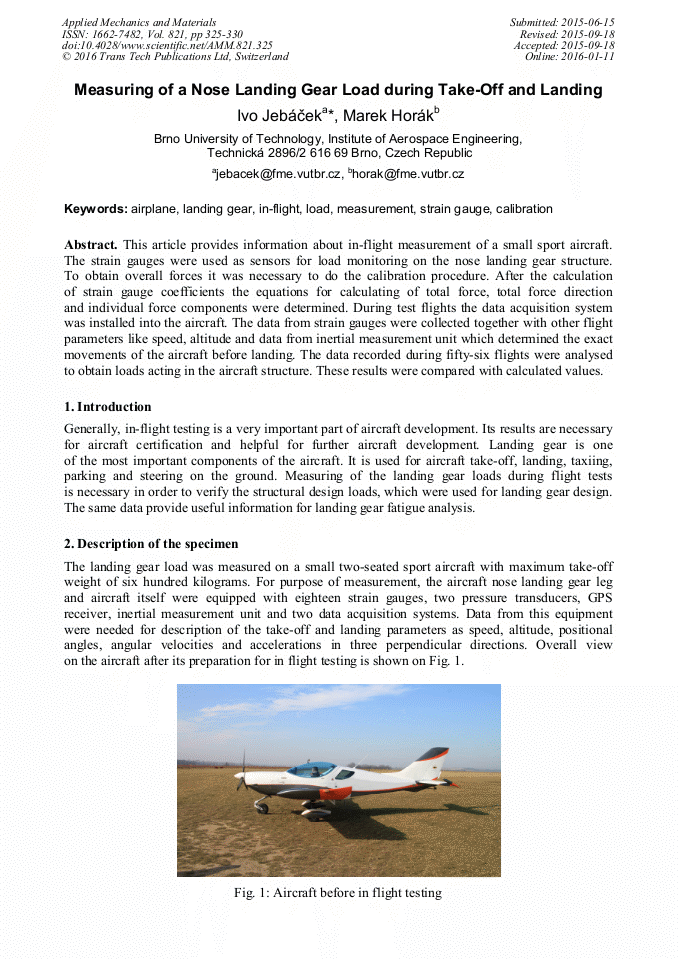
This article provides information about in-flight measurement of a small sport aircraft. The strain gauges were used as sensors for load monitoring on the nose landing gear structure. To obtain overall forces it was necessary to do the calibration procedure. After the calculation of strain gauge coefficients the equations for calculating of total force, total force direction and individual force components were determined. During test flights the data acquisition system was installed into the aircraft. The data from strain gauges were collected together with other flight parameters like speed, altitude and data from inertial measurement unit which determined the exact movements of the aircraft before landing. The data recorded during fifty-six flights were analysed to obtain loads acting in the aircraft structure. These results were compared with calculated values.
Info:
Periodical:
Pages:
325-330
DOI:
Citation:
Online since:
January 2016
Authors:
Keywords:
Price:
Сopyright:
© 2016 Trans Tech Publications Ltd. All Rights Reserved
Share:
Citation: