p.115
p.119
p.124
p.131
p.135
p.139
p.147
p.156
p.163
Properties of Water-Soluble Core-Materials Applied for LRTM

Abstract:
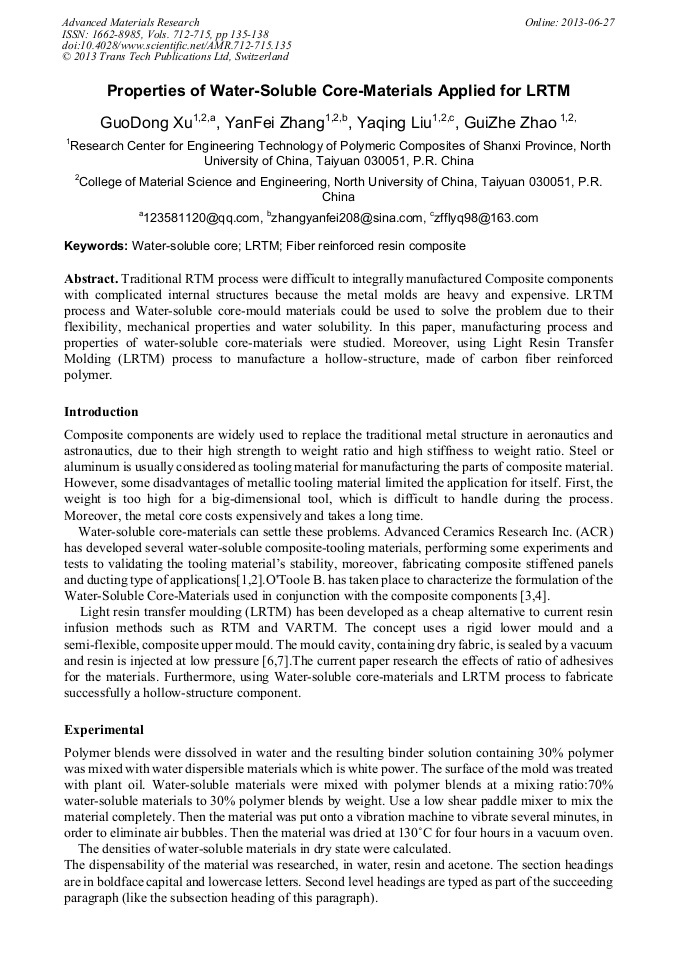
Traditional RTM process were difficult to integrally manufactured Composite components with complicated internal structures because the metal molds are heavy and expensive. LRTM process and Water-soluble core-mould materials could be used to solve the problem due to their flexibility, mechanical properties and water solubility. In this paper, manufacturing process and properties of water-soluble core-materials were studied. Moreover, using Light Resin Transfer Molding (LRTM) process to manufacture a hollow-structure, made of carbon fiber reinforced polymer.
Info:
Periodical:
Pages:
135-138
Citation:
Online since:
June 2013
Authors:
Keywords:
Price:
Permissions CCC:
Permissions PLS:
Сopyright:
© 2013 Trans Tech Publications Ltd. All Rights Reserved
Share:
Citation: