p.2382
p.2385
p.2388
p.2391
p.2394
p.2398
p.2402
p.2406
p.2411
Joining of SiC Ceramic by High Temperature Brazing Using Ni-Cr-SiC Powders as Filler

Abstract:
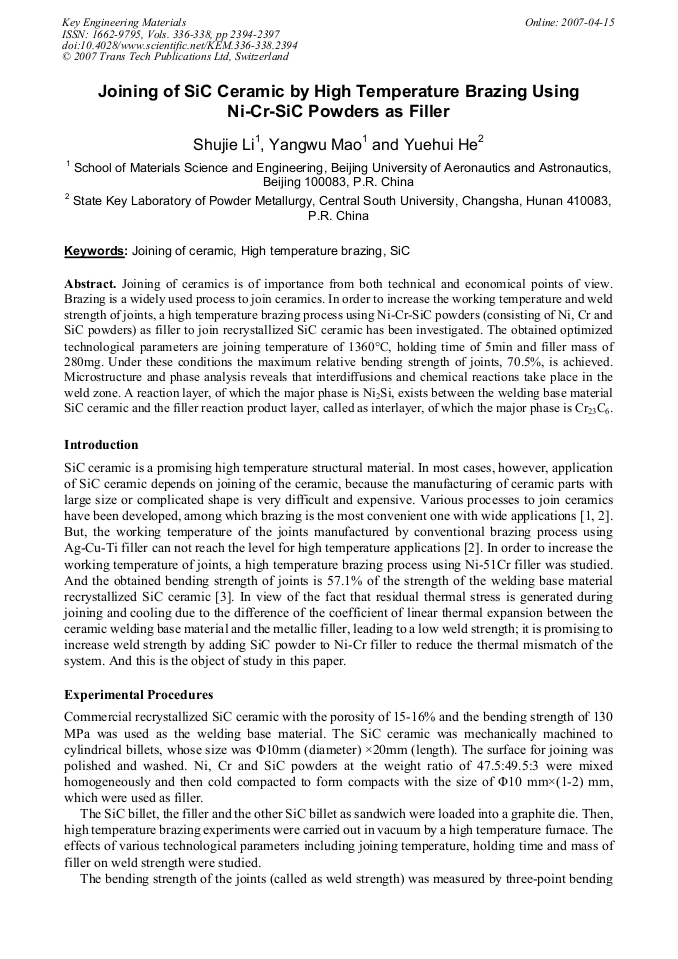
Joining of ceramics is of importance from both technical and economical points of view. Brazing is a widely used process to join ceramics. In order to increase the working temperature and weld strength of joints, a high temperature brazing process using Ni-Cr-SiC powders (consisting of Ni, Cr and SiC powders) as filler to join recrystallized SiC ceramic has been investigated. The obtained optimized technological parameters are joining temperature of 1360°C, holding time of 5min and filler mass of 280mg. Under these conditions the maximum relative bending strength of joints, 70.5%, is achieved. Microstructure and phase analysis reveals that interdiffusions and chemical reactions take place in the weld zone. A reaction layer, of which the major phase is Ni2Si, exists between the welding base material SiC ceramic and the filler reaction product layer, called as interlayer, of which the major phase is Cr23C6.
Info:
Periodical:
Pages:
2394-2397
Citation:
Online since:
April 2007
Authors:
Price:
Permissions CCC:
Permissions PLS:
Сopyright:
© 2007 Trans Tech Publications Ltd. All Rights Reserved
Share:
Citation: