p.114
p.121
p.127
p.131
p.135
p.141
p.145
p.149
p.153
Effect of Direct Electric Resistance Heat Treatment on Loading/Unloading Behavior of Nickel Titanium Orthodontic Wire

Abstract:
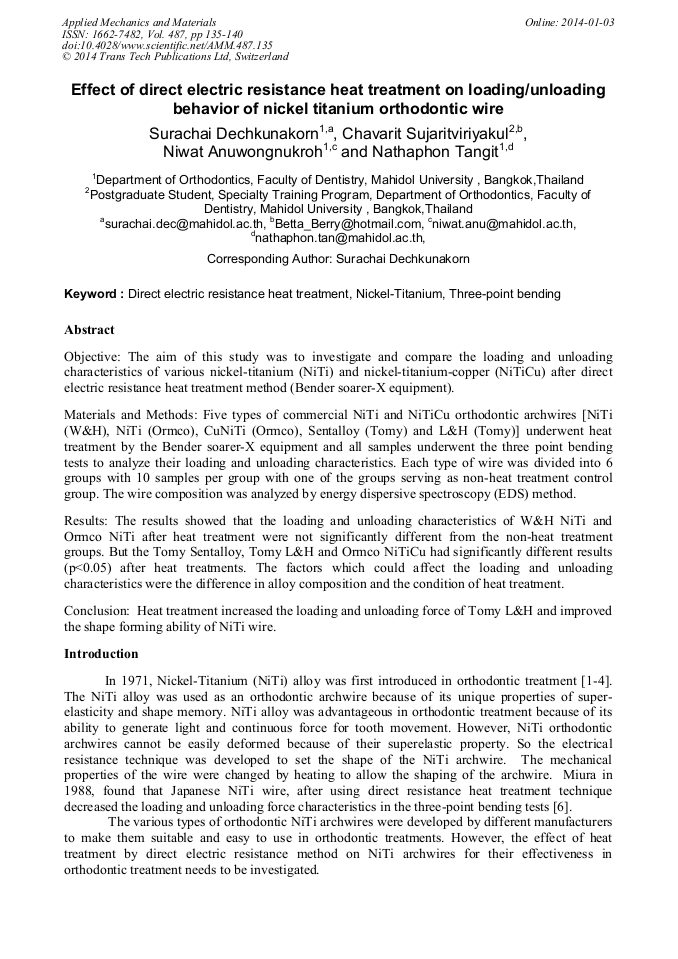
Objective: The aim of this study was to investigate and compare the loading and unloading characteristics of various nickel-titanium (NiTi) and nickel-titanium-copper (NiTiCu) after direct electric resistance heat treatment method (Bender soarer-X equipment). Materials and Methods: Five types of commercial NiTi and NiTiCu orthodontic archwires [NiTi (W&H), NiTi (Ormco), CuNiTi (Ormco), Sentalloy (Tomy) and L&H (Tomy)] underwent heat treatment by the Bender soarer-X equipment and all samples underwent the three point bending tests to analyze their loading and unloading characteristics. Each type of wire was divided into 6 groups with 10 samples per group with one of the groups serving as non-heat treatment control group. The wire composition was analyzed by energy dispersive spectroscopy (EDS) method. Results: The results showed that the loading and unloading characteristics of W&H NiTi and Ormco NiTi after heat treatment were not significantly different from the non-heat treatment groups. But the Tomy Sentalloy, Tomy L&H and Ormco NiTiCu had significantly different results (p<0.05) after heat treatments. The factors which could affect the loading and unloading characteristics were the difference in alloy composition and the condition of heat treatment. Conclusion: Heat treatment increased the loading and unloading force of Tomy L&H and improved the shape forming ability of NiTi wire.
Info:
Periodical:
Pages:
135-140
DOI:
Citation:
Online since:
January 2014
Price:
Сopyright:
© 2014 Trans Tech Publications Ltd. All Rights Reserved
Share:
Citation: