p.307
p.315
p.323
p.331
p.339
p.345
p.353
p.361
p.367
Effects of Long-Term Dry Curing on Strength Development of Initially Combined Wet/Dry-Cured and Steam-Cured Hardener-Free Epoxy-Modified Mortars

Abstract:
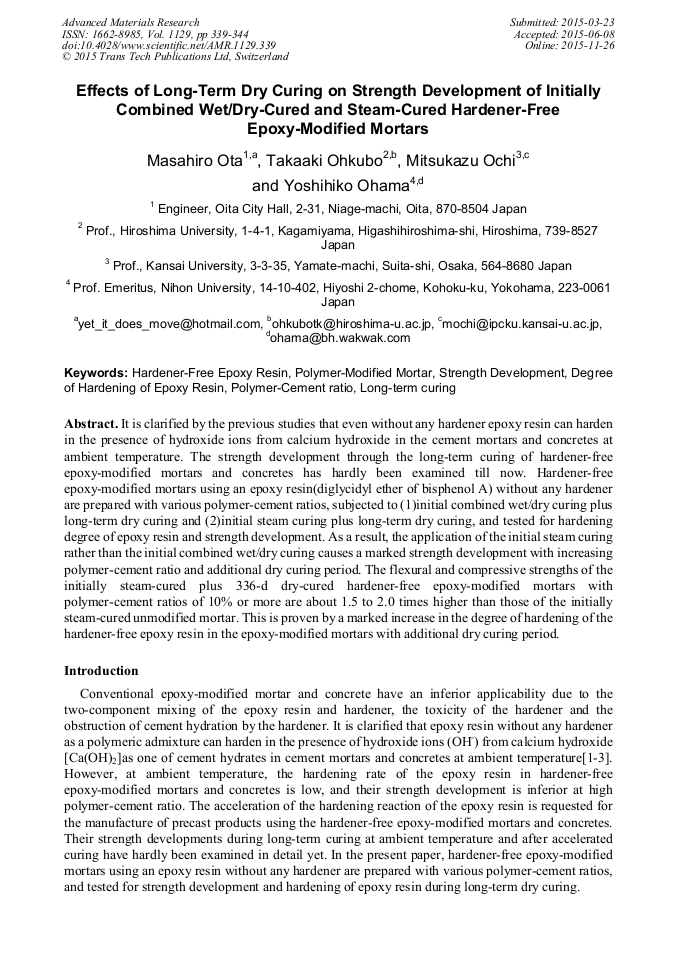
It is clarified by the previous studies that even without any hardener epoxy resin can harden in the presence of hydroxide ions from calcium hydroxide in the cement mortars and concretes at ambient temperature. The strength development through the long-term curing of hardener-free epoxy-modified mortars and concretes has hardly been examined till now. Hardener-free epoxy-modified mortars using an epoxy resin (diglycidyl ether of bisphenol A) without any hardener are prepared with various polymer-cement ratios, subjected to (1) initial combined wet/dry curing plus long-term dry curing and (2) initial steam curing plus long-term dry curing, and tested for hardening degree of epoxy resin and strength development. As a result, the application of the initial steam curing rather than the initial combined wet/dry curing causes a marked strength development with increasing polymer-cement ratio and additional dry curing period. The flexural and compressive strengths of the initially steam-cured plus 336-d dry-cured hardener-free epoxy-modified mortars with polymer-cement ratios of 10% or more are about 1.5 to 2.0 times higher than those of the initially steam-cured unmodified mortar. This is proved by a marked increase in the degree of hardening of the hardener-free epoxy resin in the epoxy-modified mortars with additional dry curing period.
Info:
Periodical:
Pages:
339-344
DOI:
Citation:
Online since:
November 2015
Authors:
Price:
Сopyright:
© 2015 Trans Tech Publications Ltd. All Rights Reserved
Share:
Citation: