p.9
p.15
p.23
p.31
p.41
p.47
p.55
p.63
p.69
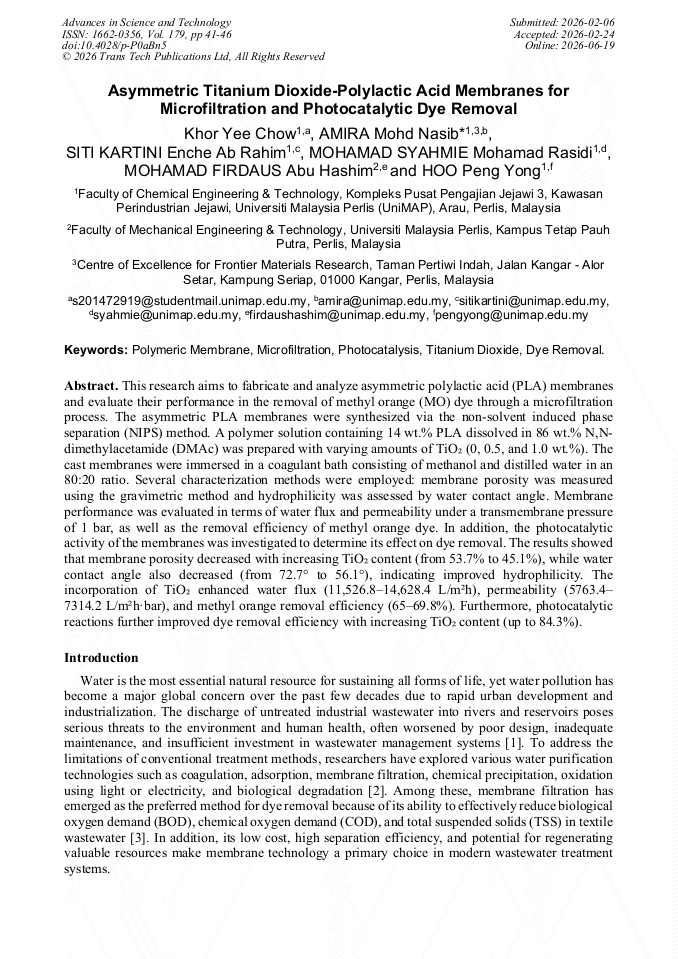
Asymmetric Titanium Dioxide-Polylactic Acid Membranes for Microfiltration and Photocatalytic Dye Removal

Abstract:
This research aims to fabricate and analyze asymmetric polylactic acid (PLA) membranes and evaluate their performance in the removal of methyl orange (MO) dye through a microfiltration process. The asymmetric PLA membranes were synthesized via the non-solvent induced phase separation (NIPS) method. A polymer solution containing 14 wt.% PLA dissolved in 86 wt.% N,N-dimethylacetamide (DMAc) was prepared with varying amounts of TiO₂ (0, 0.5, and 1.0 wt.%). The cast membranes were immersed in a coagulant bath consisting of methanol and distilled water in an 80:20 ratio. Several characterization methods were employed: membrane porosity was measured using the gravimetric method and hydrophilicity was assessed by water contact angle. Membrane performance was evaluated in terms of water flux and permeability under a transmembrane pressure of 1 bar, as well as the removal efficiency of methyl orange dye. In addition, the photocatalytic activity of the membranes was investigated to determine its effect on dye removal. The results showed that membrane porosity decreased with increasing TiO₂ content (from 53.7% to 45.1%), while water contact angle also decreased (from 72.7° to 56.1°), indicating improved hydrophilicity. The incorporation of TiO₂ enhanced water flux (11,526.8–14,628.4 L/m²h), permeability (5763.4–7314.2 L/m²h·bar), and methyl orange removal efficiency (65–69.8%). Furthermore, photocatalytic reactions further improved dye removal efficiency with increasing TiO₂ content (up to 84.3%).
Info:
Periodical:
Pages:
41-46
DOI:
Citation:
Online since:
June 2026
Price:
Сopyright:
© 2026 Trans Tech Publications Ltd. All Rights Reserved
Share:
Citation: