Drilling of CFRP Using a Solid Carbide Twist Drill
p.145
p.145
Sensitivity Analysis of Input Parameters in Wire Electric Discharge Machining Using Response Surface Methodology
p.153
p.153
Effects of High-Pressure Coolant Supply on Tool Wear and Axial Hole Deviation in through Hole Drilling ASTM 304 Using Twist Deep Hole Drill
p.163
p.163
Ripple Marks on Surface of Aluminum Alloy Strips Cast Using High Speed Twin Roll Caster Equipped with Nozzle
p.173
p.173
Citric Acid-Derived Disulphide Polymers as Carriers for Dual Drug Delivery in Chemotherapy Applications
p.181
p.181
Synthesis and Structural Characterization of Gastric Mucosal Protective Agent Nano-Sucralfate
p.189
p.189
Optimization of Electrospun Surfaces Containing Functional Bioadditives for Wound Dressing Applications
p.195
p.195
Effect of Thermal Barrier Coating Thickness on Biofuel Operated CI Engine: A Comprehensive Study
p.203
p.203
Experimental Investigation into the Effects of N-Pentanol/Diesel Blends on Cyclic Variations in a Multi-Cylinder CRDI Engine
p.219
p.219
Optimization of Electrospun Surfaces Containing Functional Bioadditives for Wound Dressing Applications

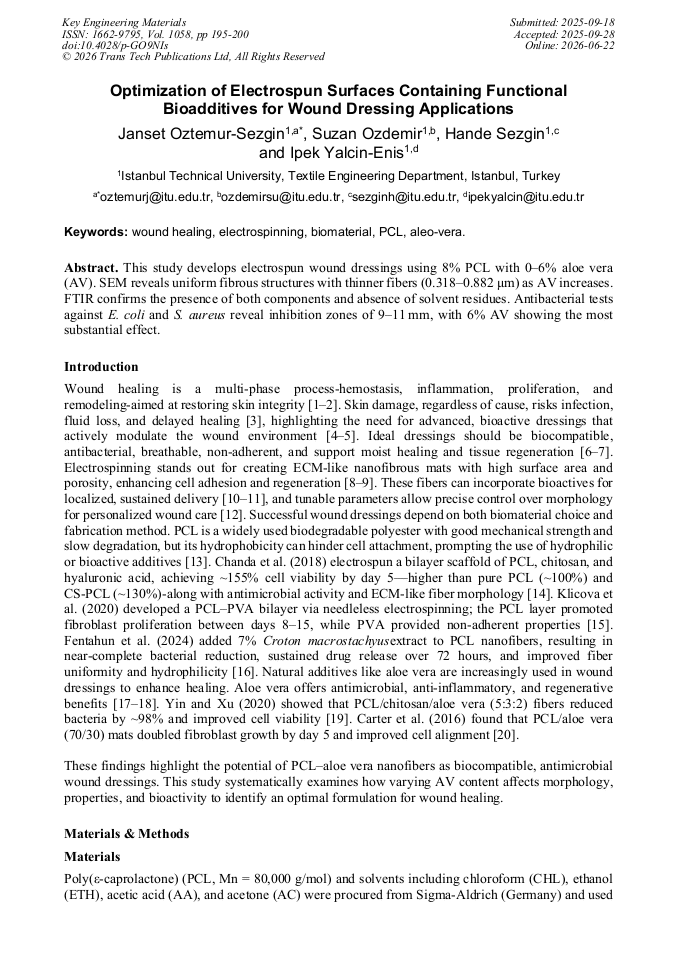
Abstract:
This study develops electrospun wound dressings using 8% PCL with 0–6% aloe vera (AV). SEM reveals uniform fibrous structures with thinner fibers (0.318–0.882 μm) as AV increases. FTIR confirms the presence of both components and absence of solvent residues. Antibacterial tests against E. coli and S. aureus reveal inhibition zones of 9–11 mm, with 6% AV showing the most substantial effect.
You might also be interested in these eBooks

Info:
Periodical:
Key Engineering Materials (Volume 1058)
Pages:
195-200
DOI:
https://doi.org/10.4028/p-GO9NIs
DOI link
Citation:
Online since:
June 2026
Authors:
Keywords:
Price:
Сopyright:
© 2026 Trans Tech Publications Ltd. All Rights Reserved
Share:
Citation: