p.3
p.9
p.15
p.27
p.33
p.39
p.47
p.57
Study on Film Morphology of Liquid Droplet Evaporation in Confined Space

Abstract:
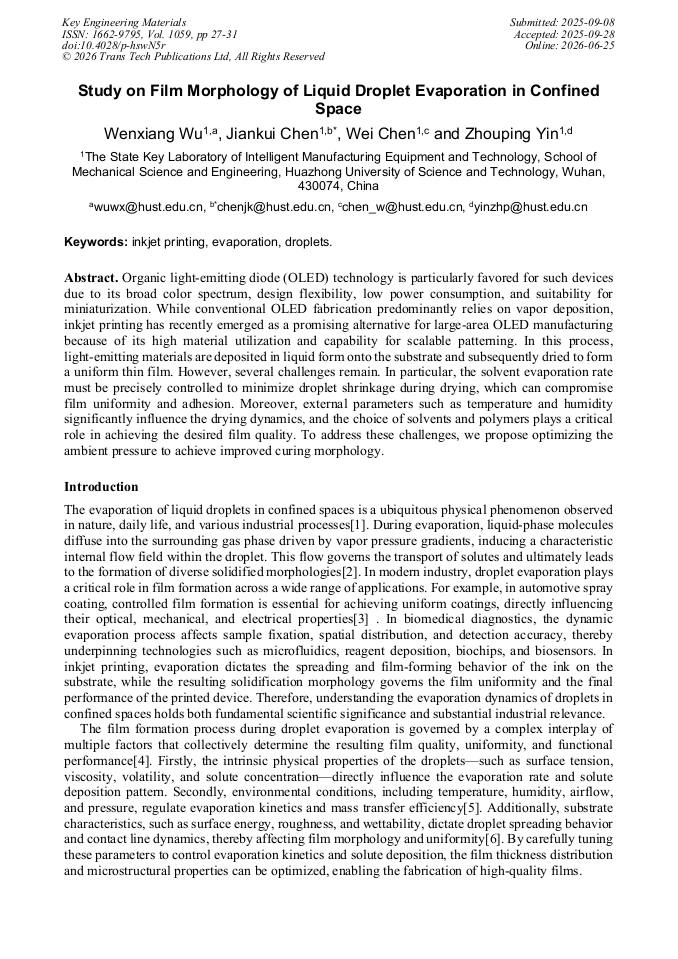
Organic light-emitting diode (OLED) technology is particularly favored for such devices due to its broad color spectrum, design flexibility, low power consumption, and suitability for miniaturization. While conventional OLED fabrication predominantly relies on vapor deposition, inkjet printing has recently emerged as a promising alternative for large-area OLED manufacturing because of its high material utilization and capability for scalable patterning. In this process, light-emitting materials are deposited in liquid form onto the substrate and subsequently dried to form a uniform thin film. However, several challenges remain. In particular, the solvent evaporation rate must be precisely controlled to minimize droplet shrinkage during drying, which can compromise film uniformity and adhesion. Moreover, external parameters such as temperature and humidity significantly influence the drying dynamics, and the choice of solvents and polymers plays a critical role in achieving the desired film quality. To address these challenges, we propose optimizing the ambient pressure to achieve improved curing morphology.
Info:
Periodical:
Pages:
27-31
DOI:
Citation:
Online since:
June 2026
Authors:
Keywords:
Price:
Сopyright:
© 2026 Trans Tech Publications Ltd. All Rights Reserved
Share:
Citation: