p.3
p.9
p.15
p.21
p.27
p.31
p.35
p.41
p.47
Austenite Grain Stability of Titanium-Modified Carburizing Steel

Abstract:
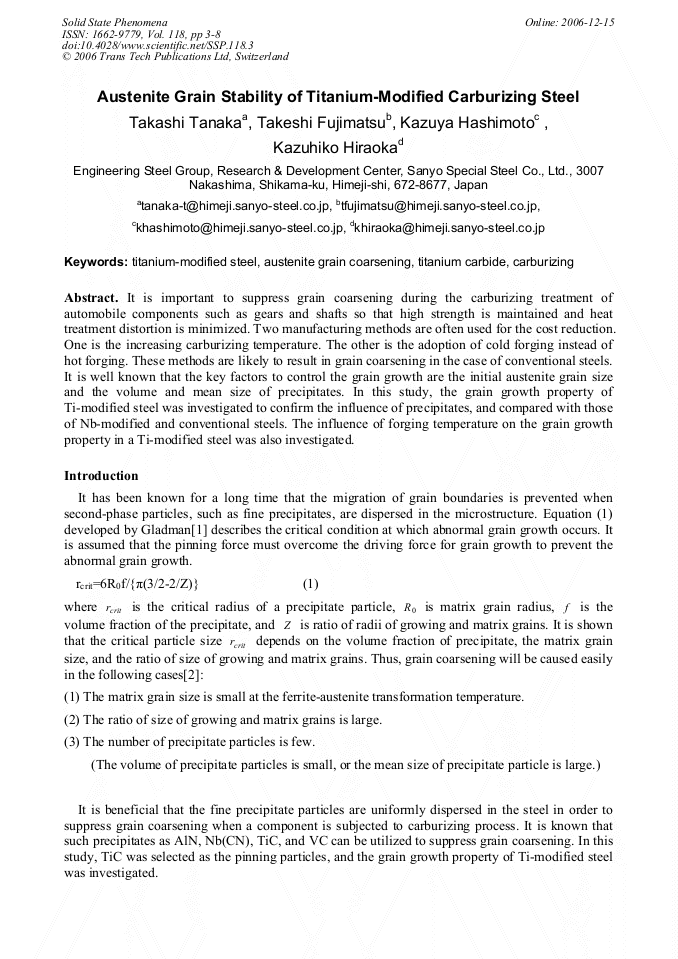
It is important to suppress grain coarsening during the carburizing treatment of automobile components such as gears and shafts so that high strength is maintained and heat treatment distortion is minimized. Two manufacturing methods are often used for the cost reduction. One is the increasing carburizing temperature. The other is the adoption of cold forging instead of hot forging. These methods are likely to result in grain coarsening in the case of conventional steels. It is well known that the key factors to control the grain growth are the initial austenite grain size and the volume and mean size of precipitates. In this study, the grain growth property of Ti-modified steel was investigated to confirm the influence of precipitates, and compared with those of Nb-modified and conventional steels. The influence of forging temperature on the grain growth property in a Ti-modified steel was also investigated.
Info:
Periodical:
Pages:
3-8
DOI:
Citation:
Online since:
December 2006
Price:
Сopyright:
© 2006 Trans Tech Publications Ltd. All Rights Reserved
Share:
Citation: