p.3914
p.3922
p.3930
p.3938
p.3947
p.3952
p.3957
p.3964
p.3972
The Study of Lean Layout in an Automotive Parts Manufacturer

Abstract:
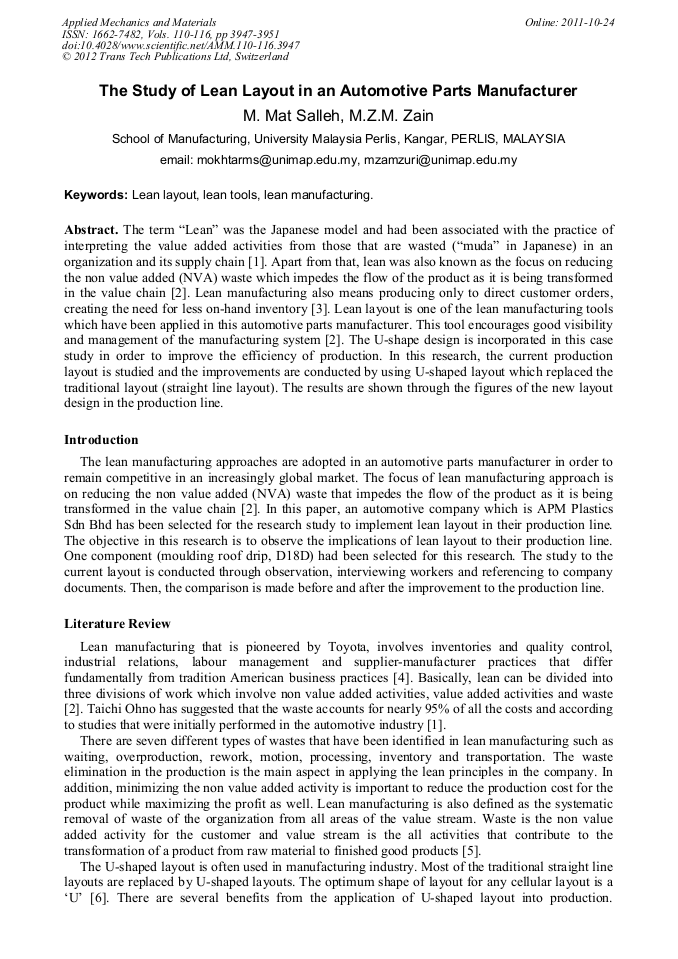
The term “Lean” was the Japanese model and had been associated with the practice of interpreting the value added activities from those that are wasted (“muda” in Japanese) in an organization and its supply chain [1]. Apart from that, lean was also known as the focus on reducing the non value added (NVA) waste which impedes the flow of the product as it is being transformed in the value chain [2]. Lean manufacturing also means producing only to direct customer orders, creating the need for less on-hand inventory [3]. Lean layout is one of the lean manufacturing tools which have been applied in this automotive parts manufacturer. This tool encourages good visibility and management of the manufacturing system [2]. The U-shape design is incorporated in this case study in order to improve the efficiency of production. In this research, the current production layout is studied and the improvements are conducted by using U-shaped layout which replaced the traditional layout (straight line layout). The results are shown through the figures of the new layout design in the production line.
Info:
Periodical:
Pages:
3947-3951
Citation:
Online since:
October 2011
Authors:
Keywords:
Price:
Сopyright:
© 2012 Trans Tech Publications Ltd. All Rights Reserved
Share:
Citation: