p.145
p.151
p.155
p.160
p.164
p.168
p.172
p.176
p.180
The Effect of Anode Width of Dual Schottky Magnetodiode to Sensitivity

Abstract:
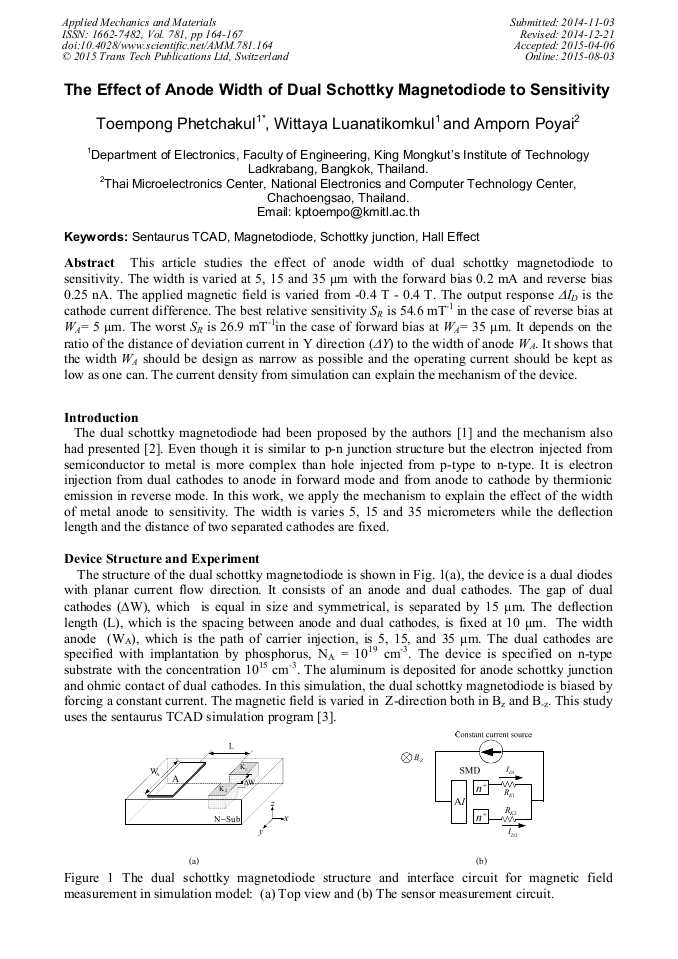
This article studies the effect of anode width of dual schottky magnetodiode to sensitivity. The width is varied at 5, 15 and 35 μm with the forward bias 0.2 mA and reverse bias 0.25 nA. The applied magnetic field is varied from -0.4 T - 0.4 T. The output response DID is the cathode current difference. The best relative sensitivity SR is 54.6 mT-1 in the case of reverse bias at WA= 5 μm. The worst SR is 26.9 mT-1in the case of forward bias at WA= 35 μm. It depends on the ratio of the distance of deviation current in Y direction (DY) to the width of anode WA. It shows that the width WA should be design as narrow as possible and the operating current should be kept as low as one can. The current density from simulation can explain the mechanism of the device.
Info:
Periodical:
Pages:
164-167
DOI:
Citation:
Online since:
August 2015
Authors:
Keywords:
Price:
Сopyright:
© 2015 Trans Tech Publications Ltd. All Rights Reserved
Share:
Citation: