p.317
p.322
p.328
p.334
p.340
p.346
p.352
p.358
p.364
Diffusion of Hydrogen in Titanium-Vanadium Alloys

Abstract:
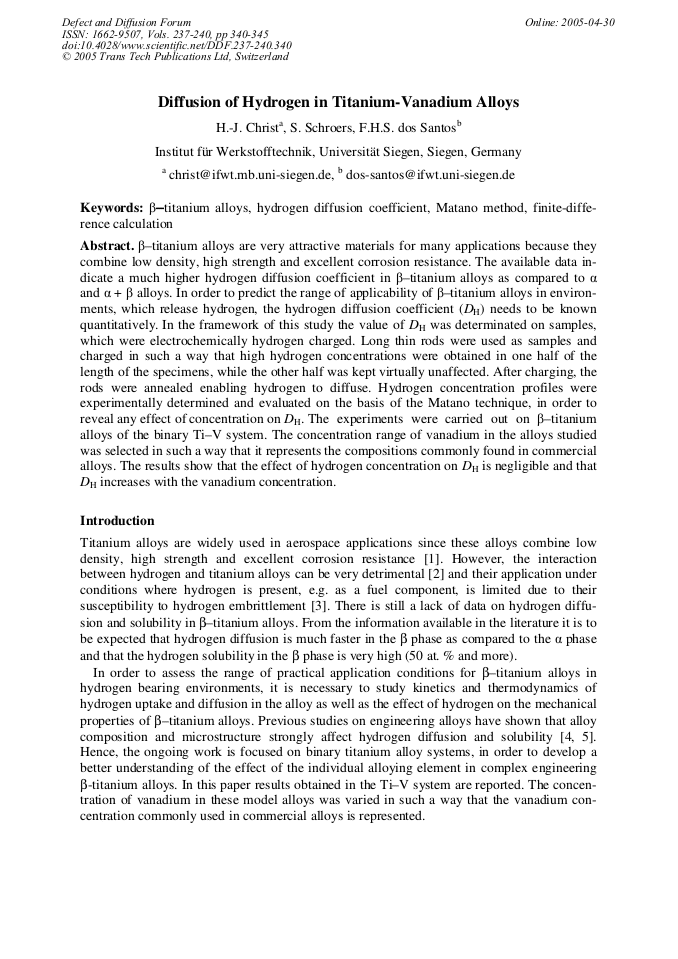
β–titanium alloys are very attractive materials for many applications because they combine low density, high strength and excellent corrosion resistance. The available data indicate a much higher hydrogen diffusion coefficient in β–titanium alloys as compared to α and α + β alloys. In order to predict the range of applicability of β–titanium alloys in environments, which release hydrogen, the hydrogen diffusion coefficient (DH) needs to be known quantitatively. In the framework of this study the value of DH was determinated on samples, which were electrochemically hydrogen charged. Long thin rods were used as samples and charged in such a way that high hydrogen concentrations were obtained in one half of the length of the specimens, while the other half was kept virtually unaffected. After charging, the rods were annealed enabling hydrogen to diffuse. Hydrogen concentration profiles were experimentally determined and evaluated on the basis of the Matano technique, in order to reveal any effect of concentration on DH. The experiments were carried out on β–titanium alloys of the binary Ti–V system. The concentration range of vanadium in the alloys studied was selected in such a way that it represents the compositions commonly found in commercial alloys. The results show that the effect of hydrogen concentration on DH is negligible and that DH increases with the vanadium concentration.
Info:
Periodical:
Pages:
340-345
Citation:
Online since:
April 2005
Authors:
Price:
Сopyright:
© 2005 Trans Tech Publications Ltd. All Rights Reserved
Share:
Citation: