p.3
p.13
p.19
p.29
p.35
p.45
p.53
p.63
Polycrystalline Thermoelectric Materials with Observed Anisotropy

Abstract:
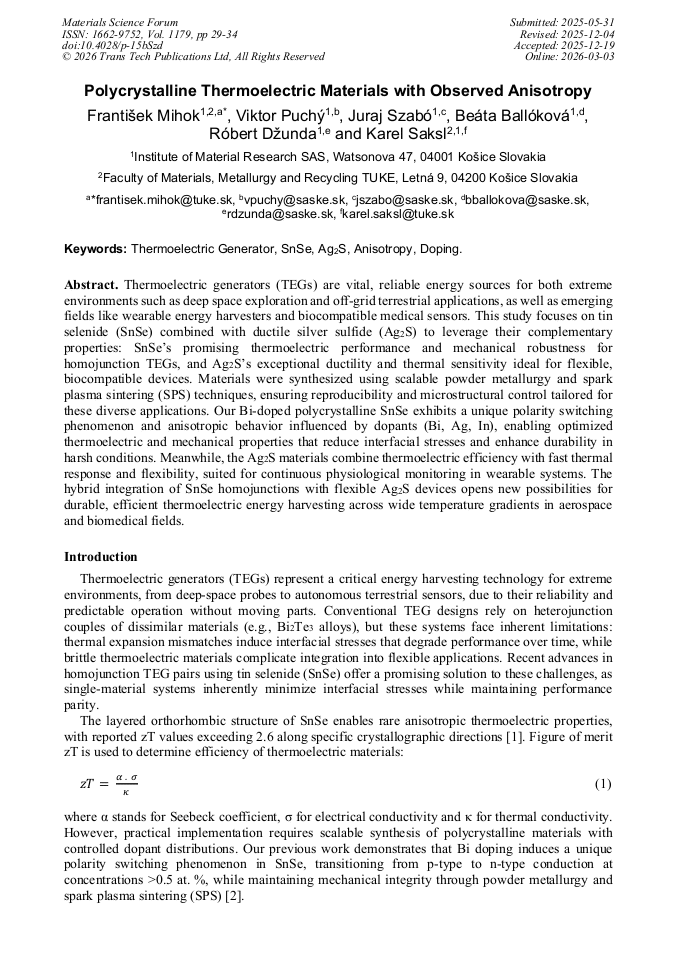
Thermoelectric generators (TEGs) are vital, reliable energy sources for both extreme environments such as deep space exploration and off-grid terrestrial applications, as well as emerging fields like wearable energy harvesters and biocompatible medical sensors. This study focuses on tin selenide (SnSe) combined with ductile silver sulfide (Ag2S) to leverage their complementary properties: SnSe’s promising thermoelectric performance and mechanical robustness for homojunction TEGs, and Ag2S’s exceptional ductility and thermal sensitivity ideal for flexible, biocompatible devices. Materials were synthesized using scalable powder metallurgy and spark plasma sintering (SPS) techniques, ensuring reproducibility and microstructural control tailored for these diverse applications. Our Bi-doped polycrystalline SnSe exhibits a unique polarity switching phenomenon and anisotropic behavior influenced by dopants (Bi, Ag, In), enabling optimized thermoelectric and mechanical properties that reduce interfacial stresses and enhance durability in harsh conditions. Meanwhile, the Ag2S materials combine thermoelectric efficiency with fast thermal response and flexibility, suited for continuous physiological monitoring in wearable systems. The hybrid integration of SnSe homojunctions with flexible Ag2S devices opens new possibilities for durable, efficient thermoelectric energy harvesting across wide temperature gradients in aerospace and biomedical fields.
Info:
Periodical:
Pages:
29-34
DOI:
Citation:
Online since:
March 2026
Authors:
Keywords:
Price:
Сopyright:
© 2026 Trans Tech Publications Ltd. All Rights Reserved
Share:
Citation: