p.3
p.11
p.16
p.20
p.24
p.28
p.32
p.36
HF-Last Wet Clean in Combination with a Low Temperature GeH4-Assisted HCl In Situ Clean Prior to Si0.8Ge0.2-on-Si Epitaxial Growth

Abstract:
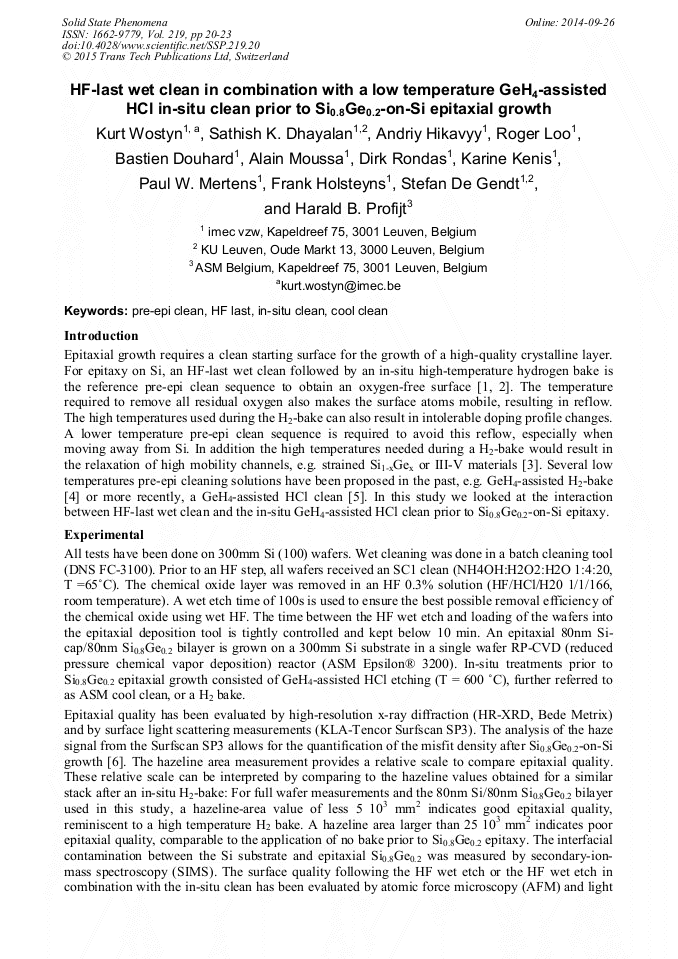
Epitaxial growth requires a clean starting surface for the growth of a high-quality crystalline layer. For epitaxy on Si, an HF-last wet clean followed by an in-situ high-temperature hydrogen bake is the reference pre-epi clean sequence to obtain an oxygen-free surface [1, 2]. The temperature required to remove all residual oxygen also makes the surface atoms mobile, resulting in reflow. The high temperatures used during the H2-bake can also result in intolerable doping profile changes. A lower temperature pre-epi clean sequence is required to avoid this reflow, especially when moving away from Si. In addition the high temperatures needed during a H2-bake would result in the relaxation of high mobility channels, e.g. strained Si1-xGex or III-V materials [3]. Several low temperatures pre-epi cleaning solutions have been proposed in the past, e.g. GeH4-assisted H2-bake [4] or more recently, a GeH4-assisted HCl clean [5]. In this study we looked at the interaction between HF-last wet clean and the in-situ GeH4-assisted HCl clean prior to Si0.8Ge0.2-on-Si epitaxy.
Info:
Periodical:
Pages:
20-23
DOI:
Citation:
Online since:
September 2014
Keywords:
Price:
Сopyright:
© 2015 Trans Tech Publications Ltd. All Rights Reserved
Share:
Citation: