p.195
p.205
p.211
p.221
p.227
p.239
p.249
p.257
p.265
Impact Resistance Study of a Protective Sabo Soil-Cement Structure Using a Weight Dropping Device

Abstract:
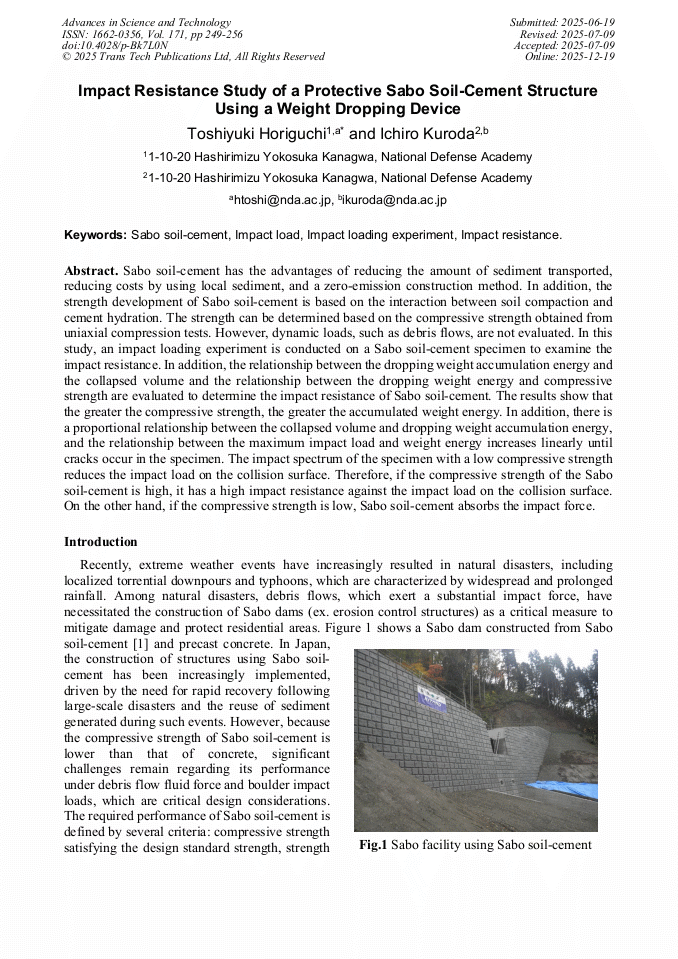
Sabo soil-cement has the advantages of reducing the amount of sediment transported, reducing costs by using local sediment, and a zero-emission construction method. In addition, the strength development of Sabo soil-cement is based on the interaction between soil compaction and cement hydration. The strength can be determined based on the compressive strength obtained from uniaxial compression tests. However, dynamic loads, such as debris flows, are not evaluated. In this study, an impact loading experiment is conducted on a Sabo soil-cement specimen to examine the impact resistance. In addition, the relationship between the dropping weight accumulation energy and the collapsed volume and the relationship between the dropping weight energy and compressive strength are evaluated to determine the impact resistance of Sabo soil-cement. The results show that the greater the compressive strength, the greater the accumulated weight energy. In addition, there is a proportional relationship between the collapsed volume and dropping weight accumulation energy, and the relationship between the maximum impact load and weight energy increases linearly until cracks occur in the specimen. The impact spectrum of the specimen with a low compressive strength reduces the impact load on the collision surface. Therefore, if the compressive strength of the Sabo soil-cement is high, it has a high impact resistance against the impact load on the collision surface. On the other hand, if the compressive strength is low, Sabo soil-cement absorbs the impact force.
Info:
Periodical:
Pages:
249-256
DOI:
Citation:
Online since:
December 2025
Authors:
Price:
Сopyright:
© 2025 Trans Tech Publications Ltd. All Rights Reserved
Share:
Citation: