Numerical Simulation of Automotive Crash-Box Subjected to Low Velocity Frontal Impact
p.17
p.17
Molecular Dynamics Simulation on Crack Propagation for Magnesium
p.21
p.21
On the Use of the Theory of Critical Distances to Estimate KIc and ∆Kth from Experimental Results Generated by Testing Standard Notches
p.25
p.25
Improvement of Corrosion Behavior of the Cu-Ni Alloy with Electroless Ni-P Plating
p.29
p.29
Simultaneous Edge Debonding Monitoring and Repair of Dynamically Loaded Concrete Structures Strengthened with Smart Composite Materials
p.33
p.33
Targeting Problems of Composite Failure
p.37
p.37
Non Destructive Characterization of Concrete Joints Using the Scaling Subtraction Method
p.41
p.41
Simulation of Curved Fatigue Crack Growth with Calculation of the Plastic Limit Load
p.45
p.45
Study of the Effect of DCT and PVD Treatments on the Fatigue Behaviour of AISI 302 Stainless Steel
p.49
p.49
Simultaneous Edge Debonding Monitoring and Repair of Dynamically Loaded Concrete Structures Strengthened with Smart Composite Materials

Abstract:
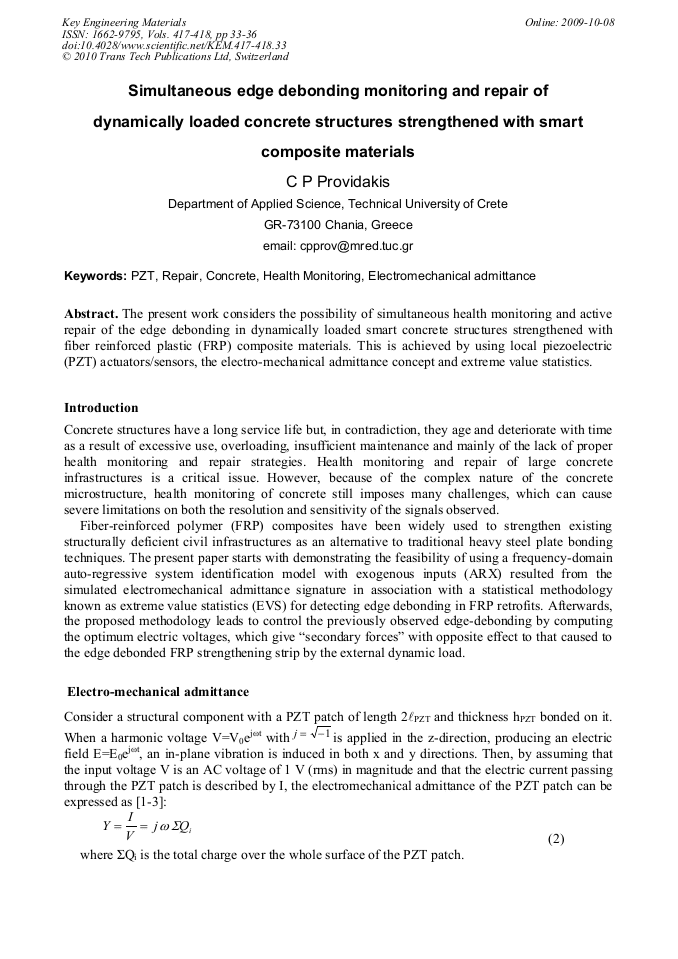
The present work considers the possibility of simultaneous health monitoring and active repair of the edge debonding in dynamically loaded smart concrete structures strengthened with fiber reinforced plastic (FRP) composite materials. This is achieved by using local piezoelectric (PZT) actuators/sensors, the electro-mechanical admittance concept and extreme value statistics.
You might also be interested in these eBooks
Info:
Periodical:
Key Engineering Materials (Volumes 417-418)
Pages:
33-36
Citation:
Online since:
October 2009
Authors:
Keywords:
Price:
Сopyright:
© 2010 Trans Tech Publications Ltd. All Rights Reserved
Share:
Citation: