p.74
p.83
p.89
p.96
p.102
p.108
p.114
p.120
p.126
The Matrix Effect and Application of the Multi-Parameter Optimization Method for X-Ray Spectrometric Determination of the Quantitative Composition of Clays

Abstract:
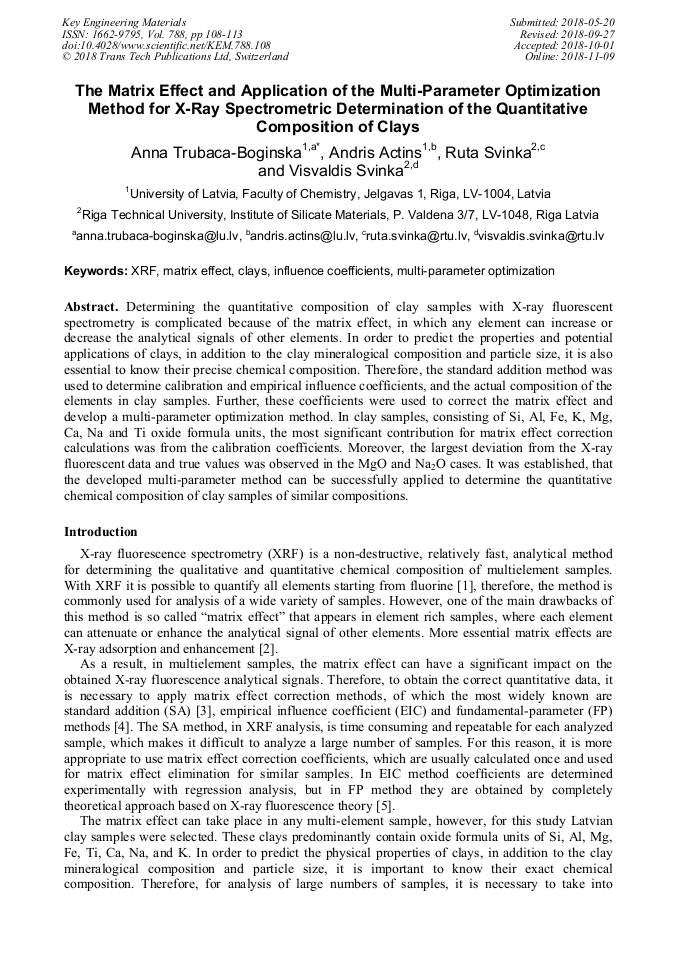
Determining the quantitative composition of clay samples with X-ray fluorescent spectrometry is complicated because of the matrix effect, in which any element can increase or decrease the analytical signals of other elements. In order to predict the properties of clays, it is essential to know their precise chemical composition. Therefore, using the standard addition method was determined calibration and empirical influence coefficients, as well as the true composition of the elements. Farther, these coefficients were used to correct the matrix effect and develop a multi-parameter optimization method. It was determined that in clay samples, consisting of Si, Al, Fe, K, Mg, Ca, Na and Ti oxide formula units, the most significant contribution for matrix effect correction calculations was from the calibration coefficients. Moreover, the largest deviation from the X-ray fluorescent data and true values was determined in the MgO and Na2O cases. In this study was established, that the developed multi-parameter method can be successfully applied to determine the quantitative chemical composition of clay samples of similar compositions.
Info:
Periodical:
Pages:
108-113
DOI:
Citation:
Online since:
November 2018
Authors:
Keywords:
Price:
Сopyright:
© 2018 Trans Tech Publications Ltd. All Rights Reserved
Share:
Citation: