p.259
p.265
p.271
p.277
p.285
p.291
p.297
p.303
p.309
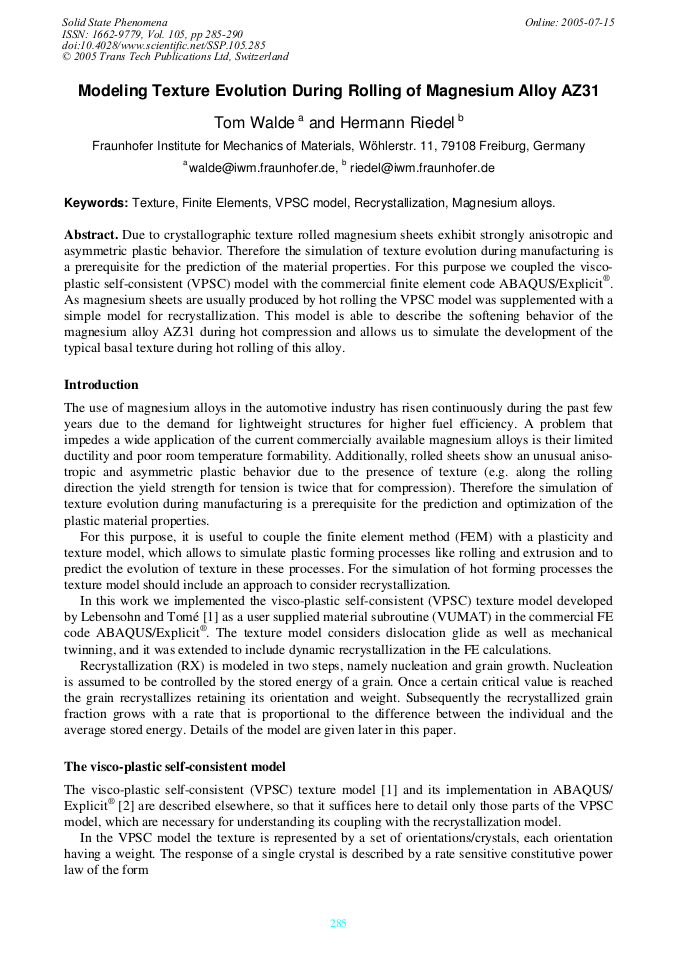
Modeling Texture Evolution during Rolling of Magnesium Alloy AZ31

Abstract:
Due to crystallographic texture rolled magnesium sheets exhibit strongly anisotropic and asymmetric plastic behavior. Therefore the simulation of texture evolution during manufacturing is a prerequisite for the prediction of the material properties. For this purpose we coupled the viscoplastic self-consistent (VPSC) model with the commercial finite element code ABAQUS/Explicit®. As magnesium sheets are usually produced by hot rolling the VPSC model was supplemented with a simple model for recrystallization. This model is able to describe the softening behavior of the magnesium alloy AZ31 during hot compression and allows us to simulate the development of the typical basal texture during hot rolling of this alloy.
Info:
Periodical:
Pages:
285-290
DOI:
Citation:
Online since:
July 2005
Authors:
Keywords:
Price:
Сopyright:
© 2005 Trans Tech Publications Ltd. All Rights Reserved
Share:
Citation: